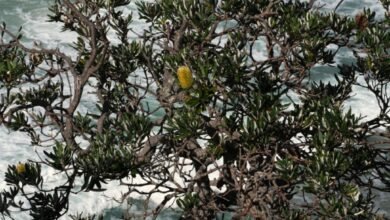
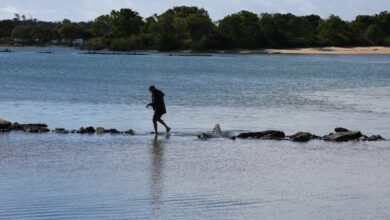
Tim Pearson, Flying Fox expert and Ross Macleay Landcare expert guided our ‘Bellingen Island Ecology Walk’ in Gumbaynggirr Country. Hosted by Bellingen Shire Council and BSC River and Biodiversity Officer Celeste Lymn.
Bat (or Bellinger) Island is extremely rare Lowland Subtropical Rainforest with some very large Casuarinas and Strangler Figs, and Booyong trees.
Europeans arrived in the Valley in 1841 after the Red Cedar and they ran sheep and cattle later that decade. After the Crown Lands Act of 1861, selection of farming land, particularly on the floodplain and terraces, followed quickly. The Gumbaynggirr were dispossessed and the rainforest cleared.
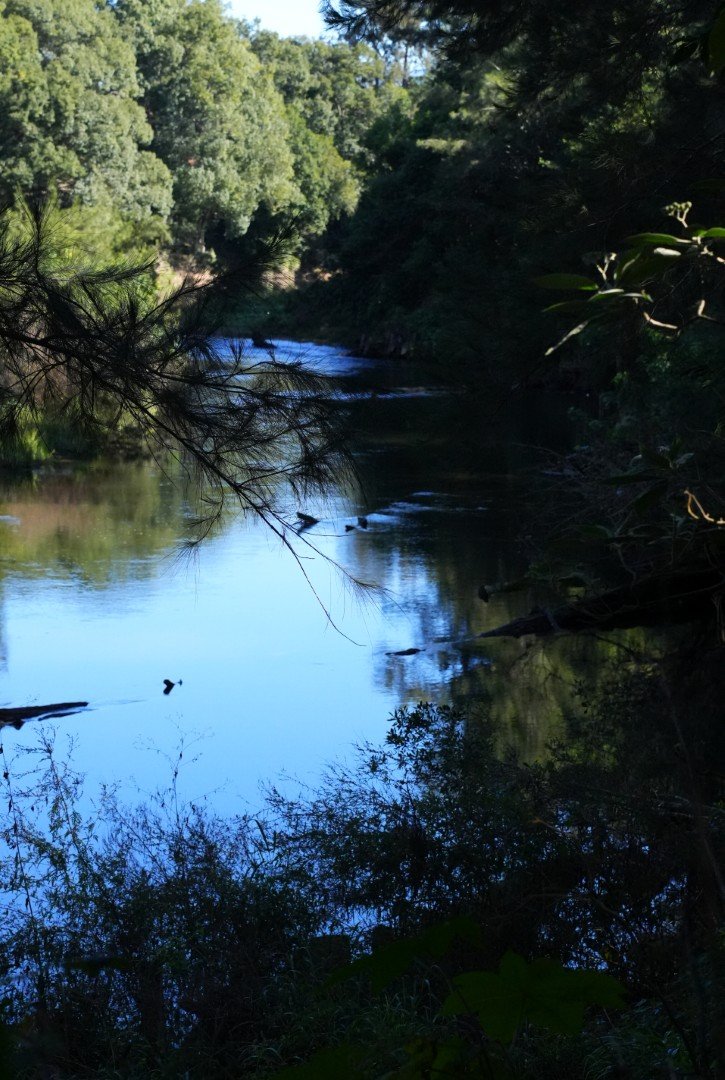
Bellingen Island remained Crown land because of its susceptibility to flooding, and was used as a collection point for red cedar logs floated down river. After the 1974 flood, the main course of the Bellinger River moved to the old overflow on the southern side of the Island. The northern channel became wider, shallower and eventually silted up. It is no longer an island.
Restoration has been ongoing since the 1980s. Madeira vine and Tradescantia are constantly removed (after every flood) to allow for the natural regeneration of native seedlings. Local volunteers are key to maintain a rare habitat and a healthy camp.
Around 20,000 Grey-headed Flying-foxes are currently in the camp. A few Black Flying-foxes were at one end. Little Red Flying-foxes can be found on Newry Island in the Kalang River estuary further East.
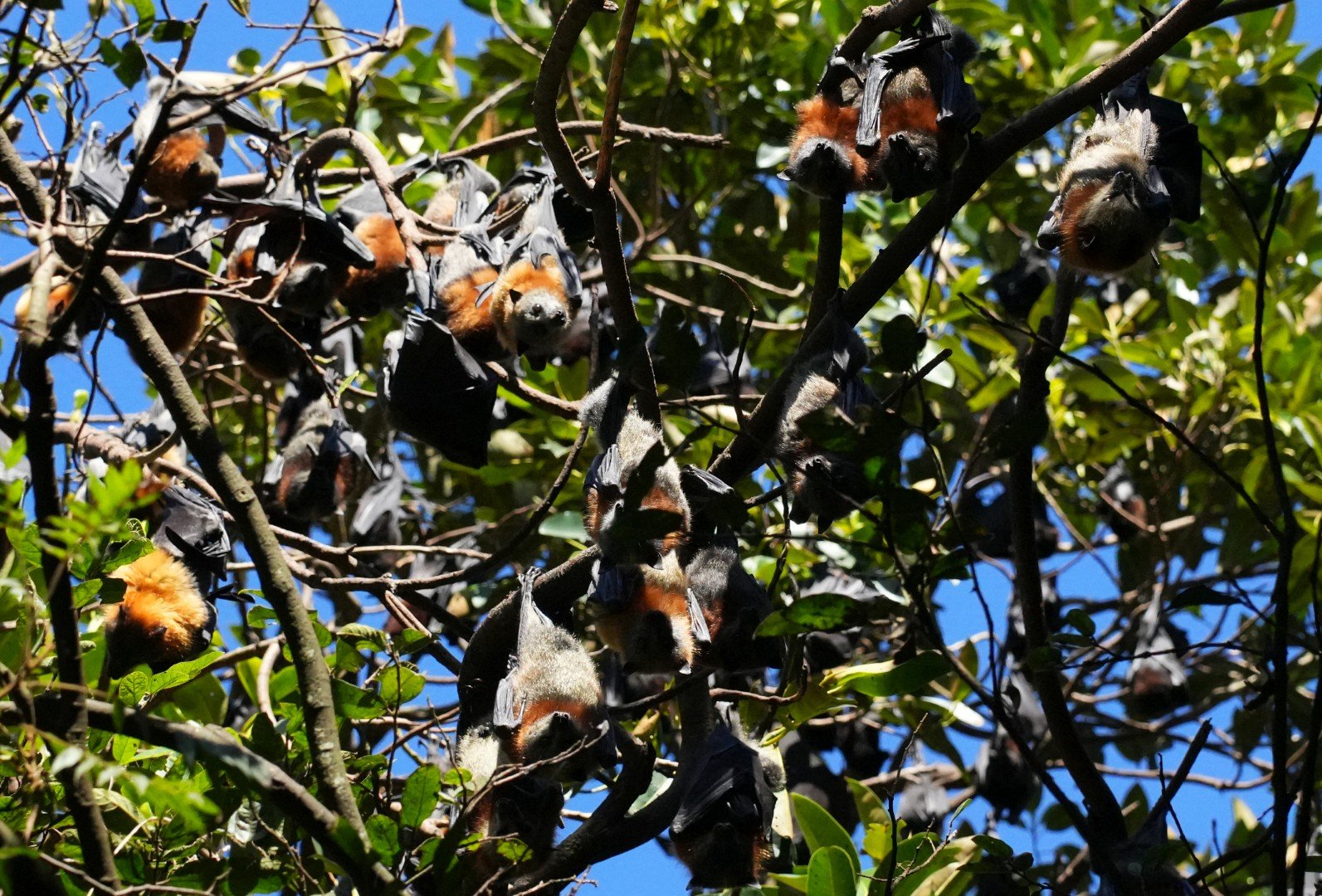
They feed on the nectar, pollen, and fruit of over 100 native plant species. They are vital keystone pollinators and seed dispersers for the east coast forests being the only pollinators for specific, iconic Australian gum trees, including Eucalyptus, Corymbia, and Angophora. They pollinate night-flowering natives and trees that bees cannot reach. Without them, forest ecosystems could collapse impacting so many other animals and birds, and biodiversity in total. We hear them feeding nosily around our house when the Pink Bloodwood is flowering.
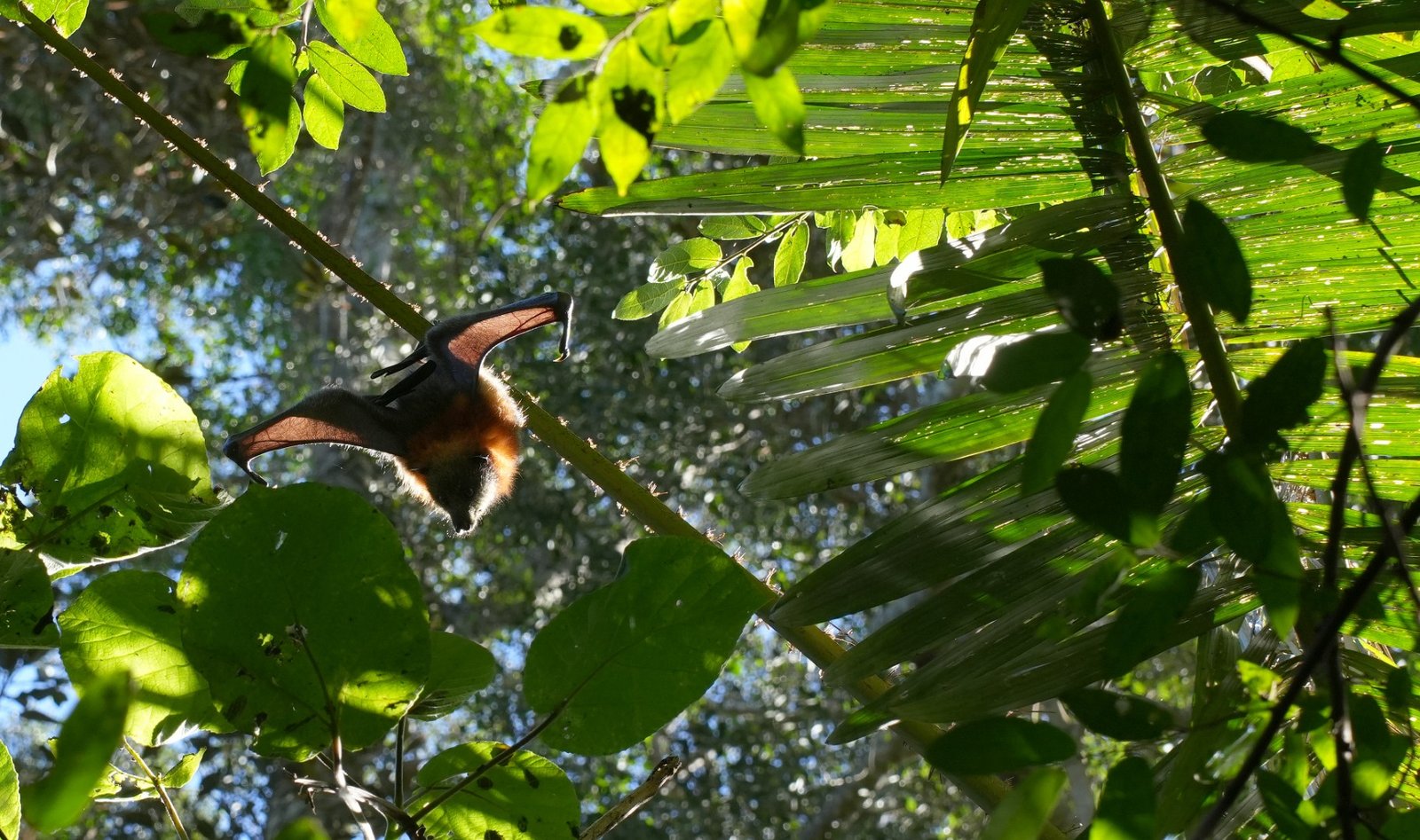
They roost in all kinds of places if not far from food. They move from camp to camp, though suitable habit is shrinking all the time. the population in this camp can vary hugely from zero to 40 thousand or more depending on the broader environment. Grey-headed Flying-fox populations are considered to be in long-term decline and are listed as vulnerable. While estimates vary between 200,000–800,000, numbers have fallen significantly from millions in the early 20th century.
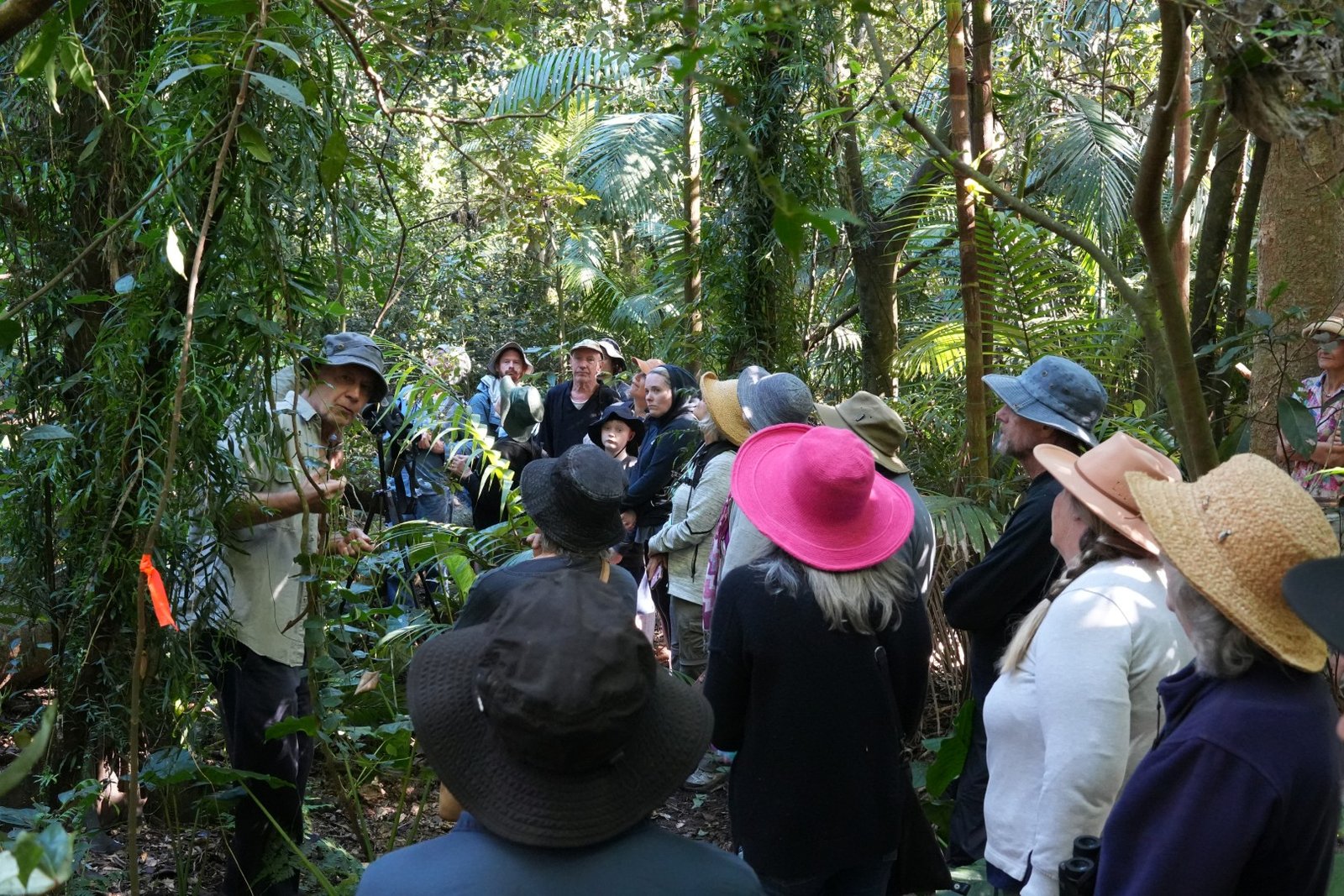
Ross Macleay talking about the vegetation
This camp is a good one for the bats as it has ongoing habitat restoration and is supported by most of the local people. The bats are used to people, so it is a good camp to visit without disturbing the owners.
More info on Flying Foxes and this camp here: