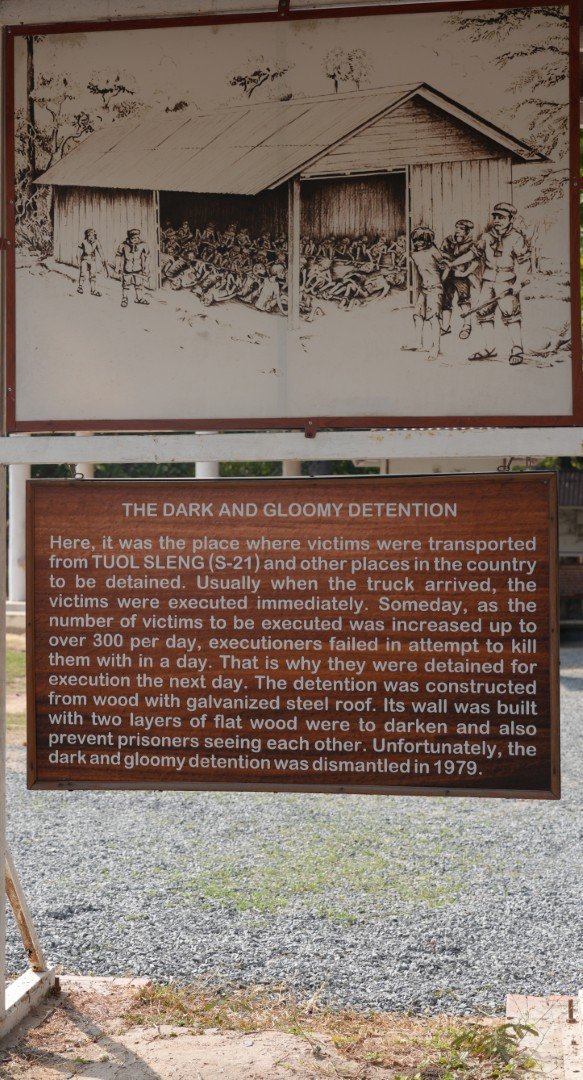
One of the Khmer Rouge regime’s main execution grounds on the outskirts of Phnom Penh dispatched an estimated 20,000 human beings between 1976 and 1979. The vast majority killed here at Choeung Ek (‘The Killing Fields’), were brought from S-21 (Tuol Sleng) after being interrogated/tortured. Following the fall of the Khmer Rouge regime in January 1979, more than 80 mass graves in the vicinity have been excavated, of a suspected 130. 8,985 sets of remains have been exhumed.
Carry abroad the urgent need, the scene,
to photograph and to extend the voice,
to speak this meaning.
Muriel Rukeyser, ‘The Book of the Dead’.
An orchard and a Chinese graveyard
The Pits
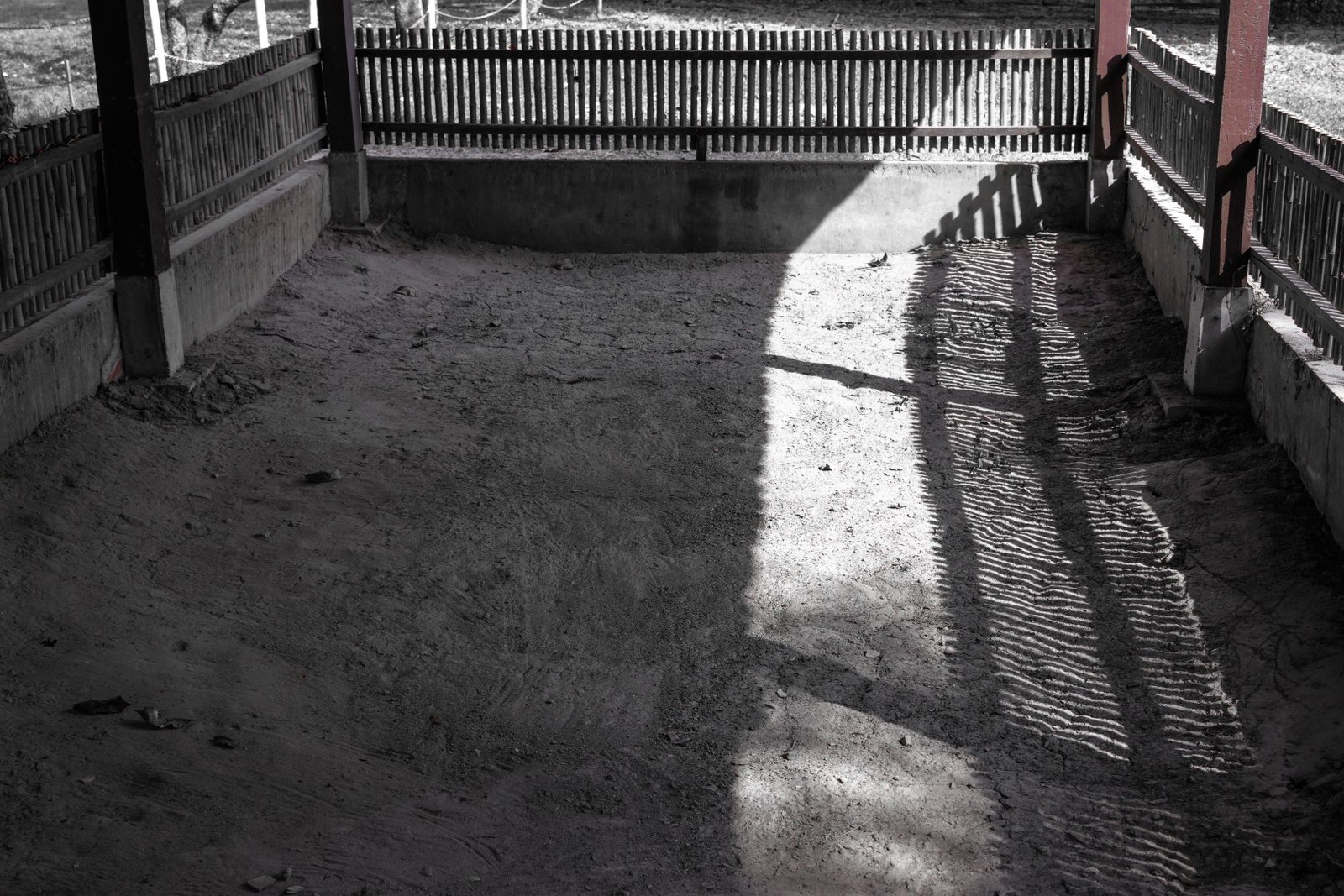
I am surrounded by excavations with formal properties, neatly rectangular, backed up level until dug up again. Were they deep enough to muzzle the voices? And the name?
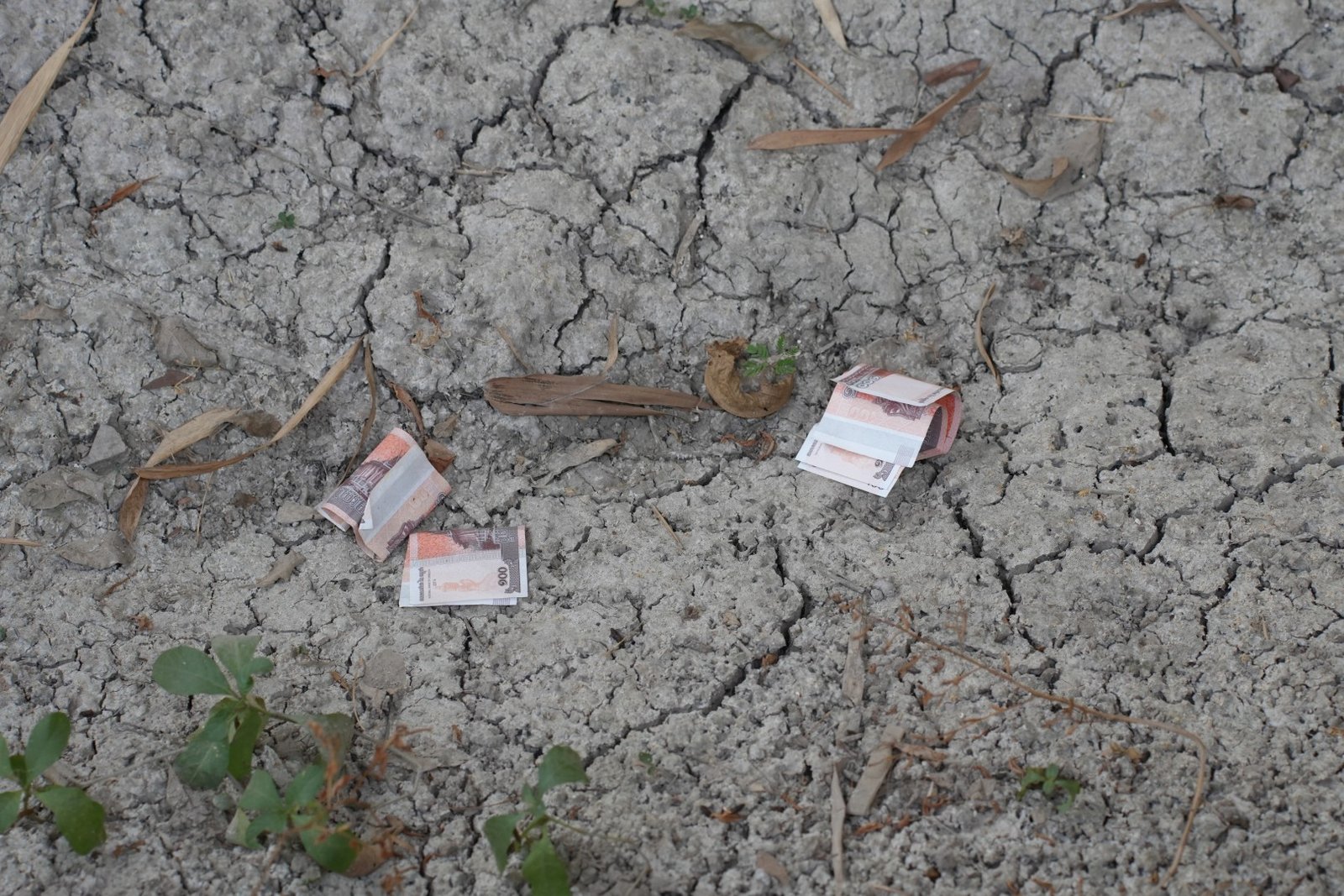
Wyn buys lotus flowers in memory of her sister
who died two weeks ago, in her eighties. Sleep
or death, relief again. What is it like to be dead?
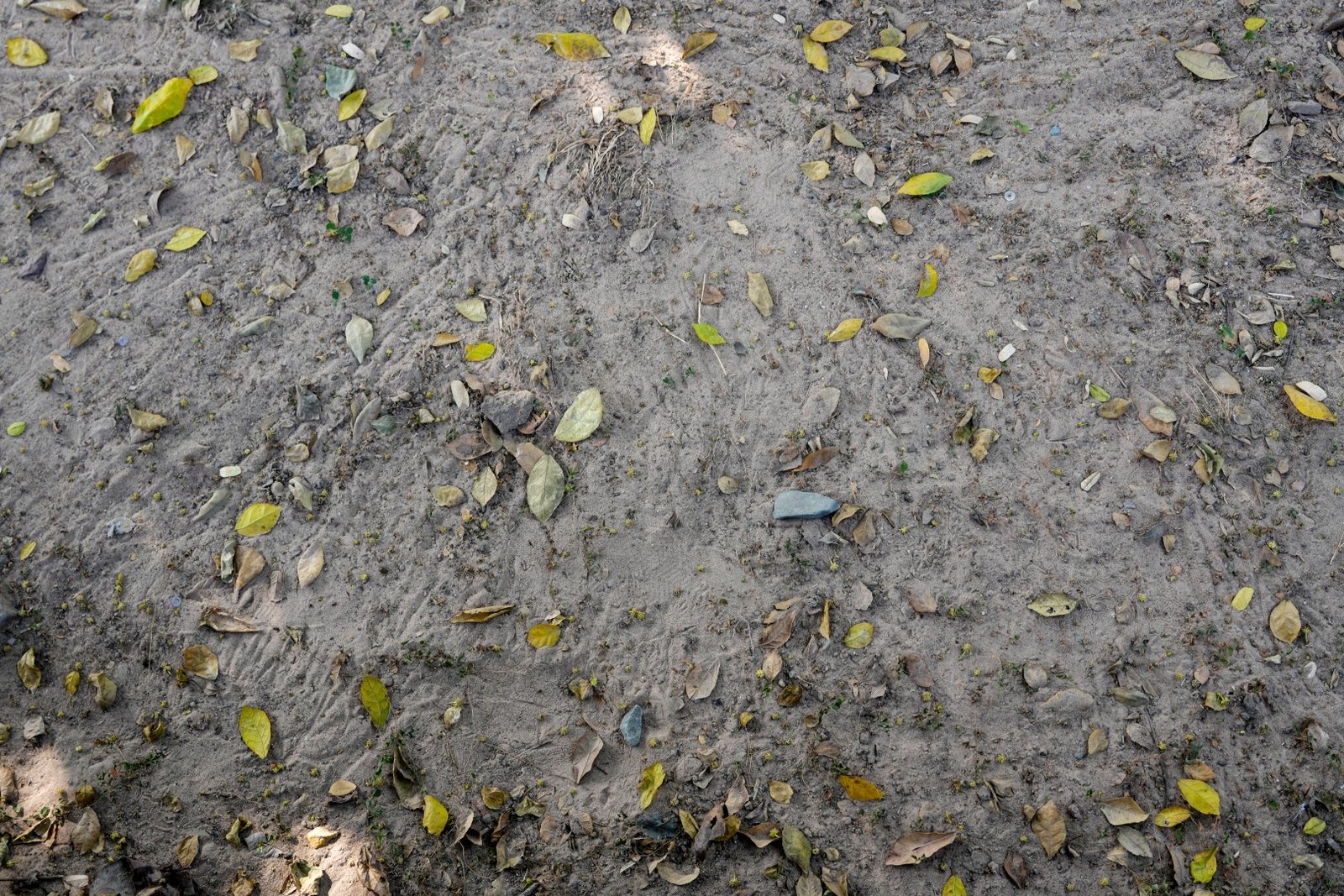
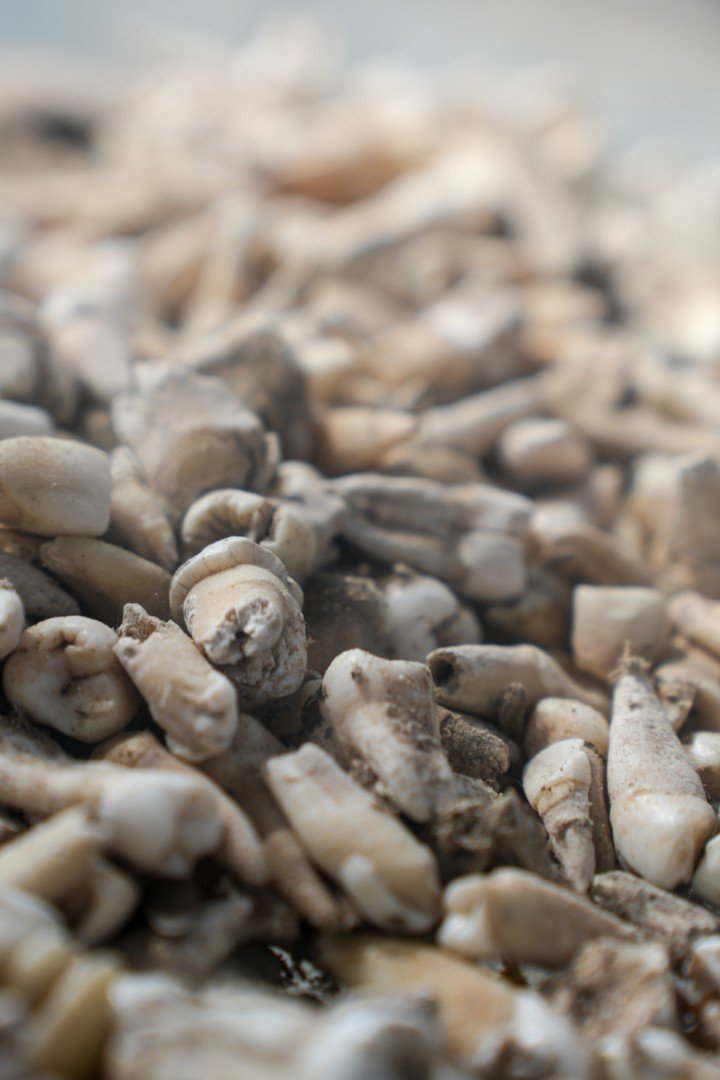
A sign reads ‘Do Not Step on Human Remains’.
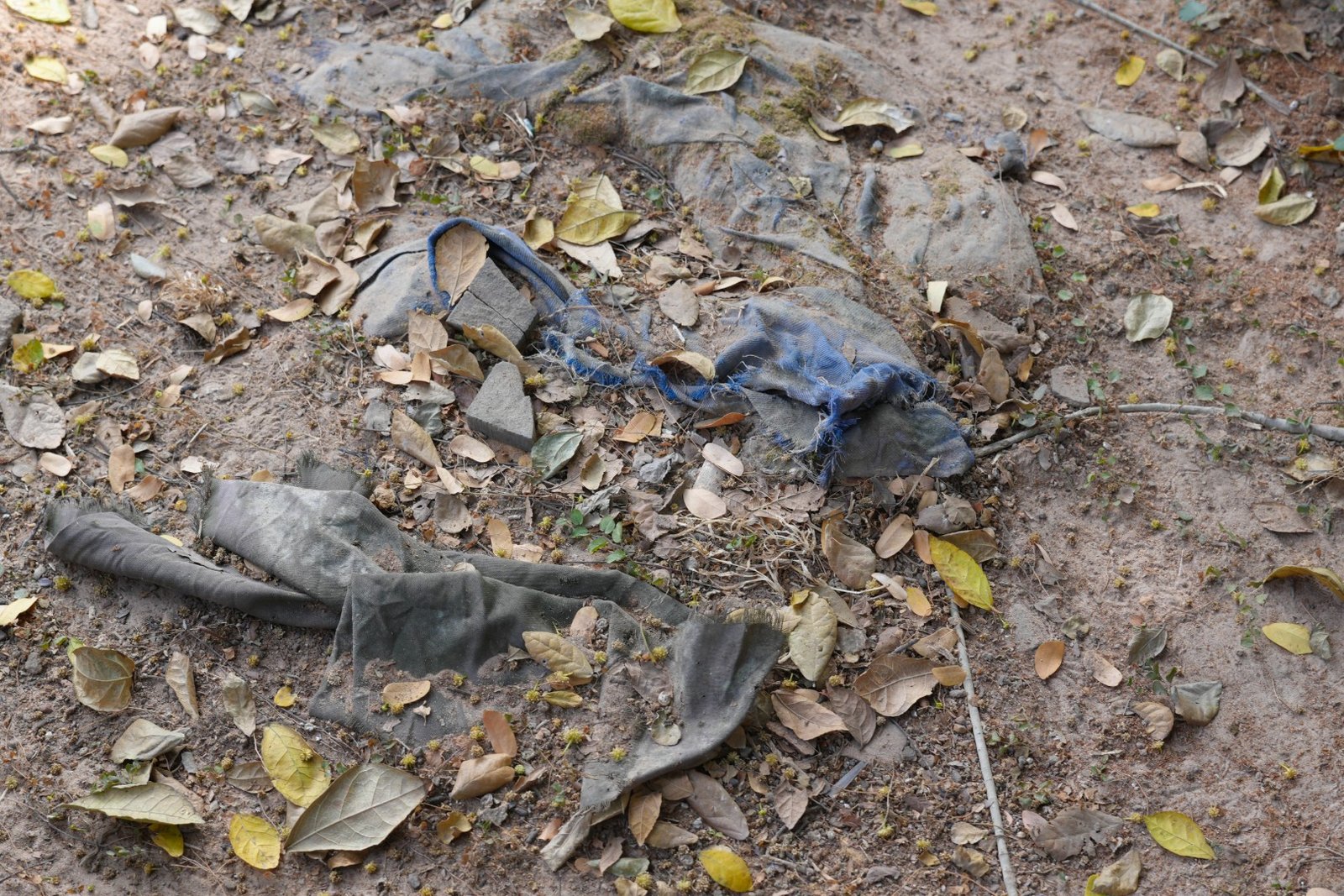
Care
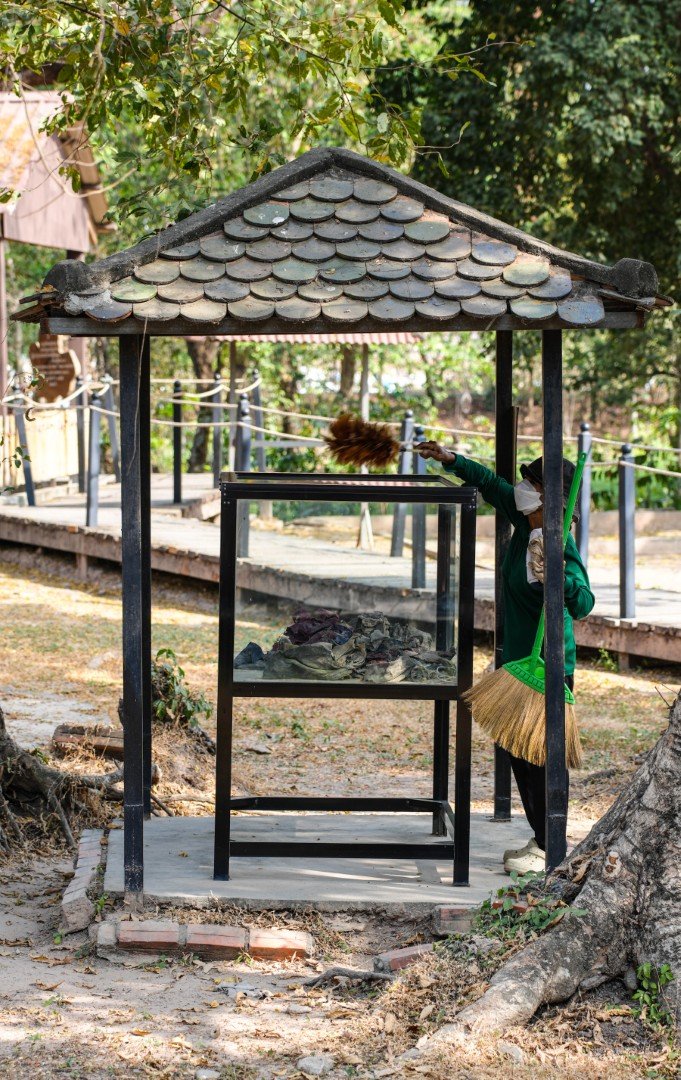
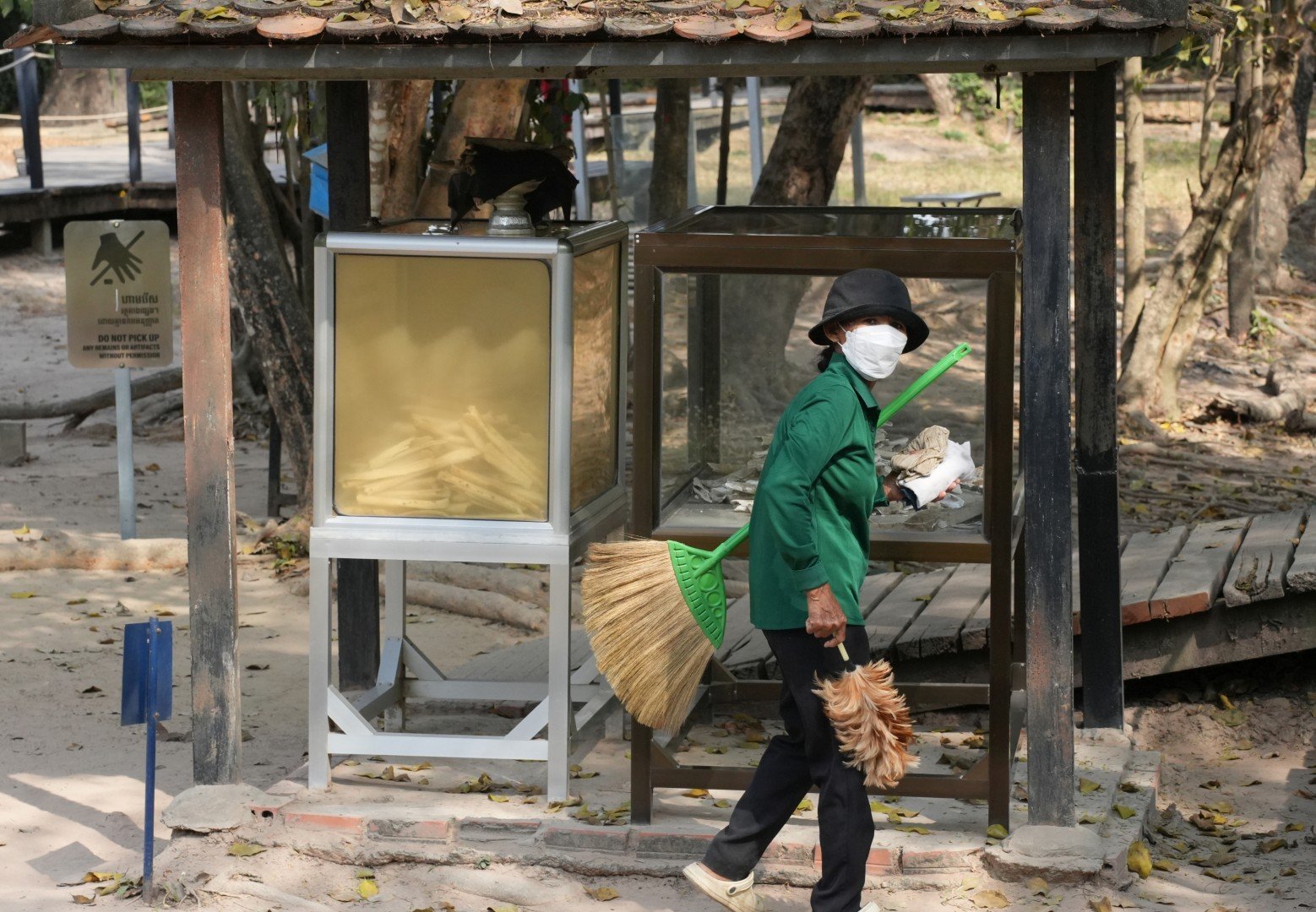
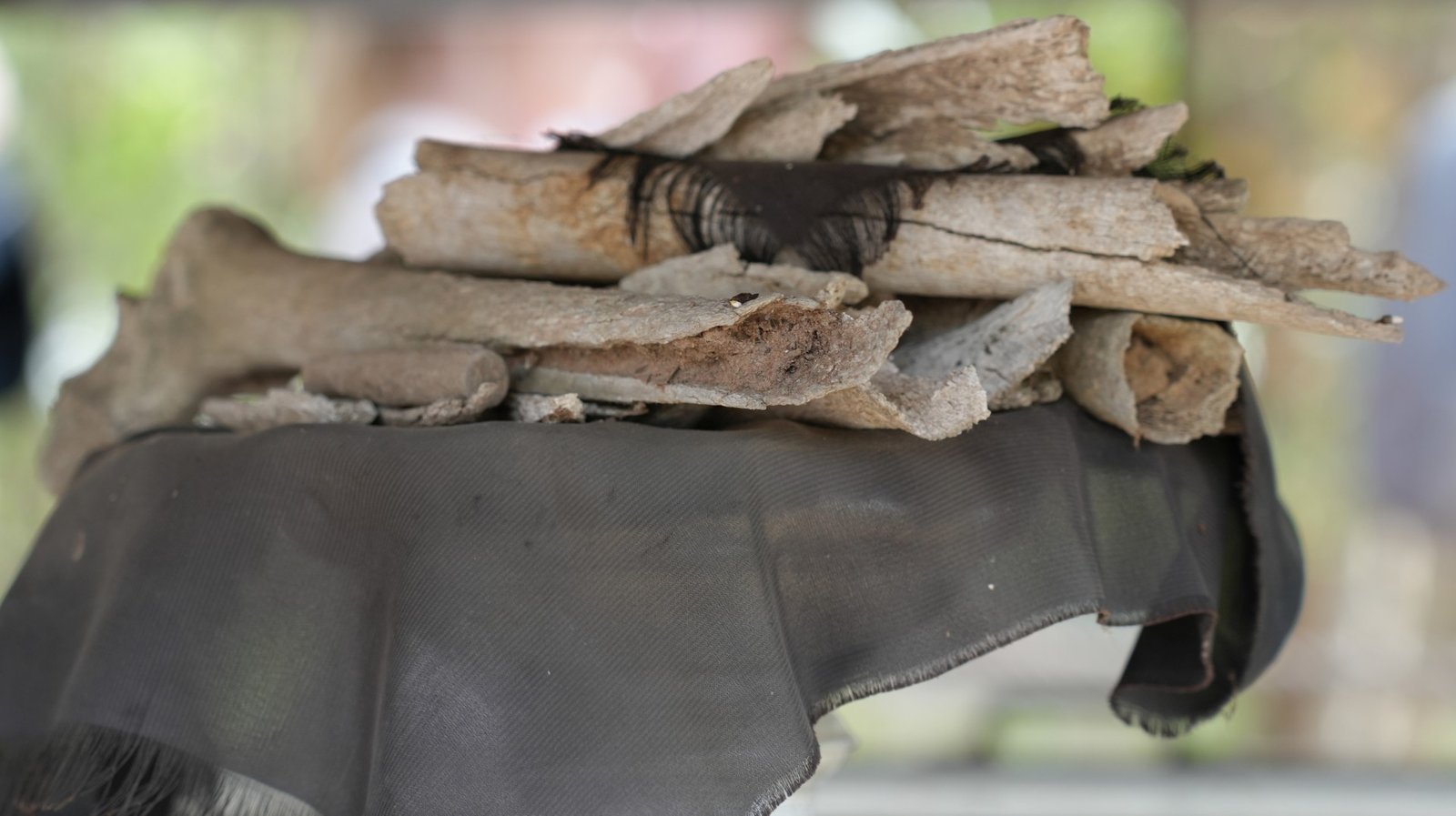
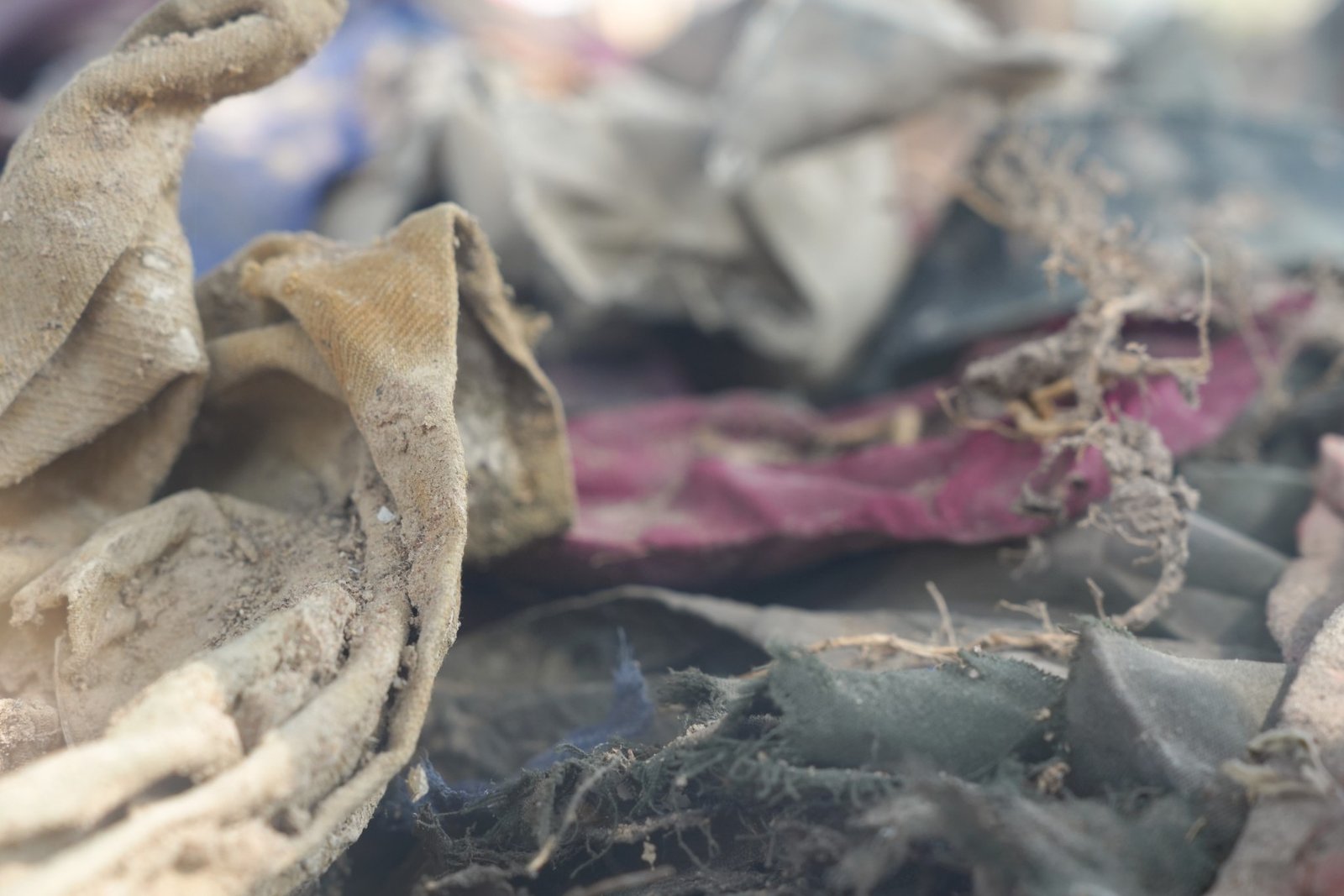
Who decided we need clothes in such a hot climate?
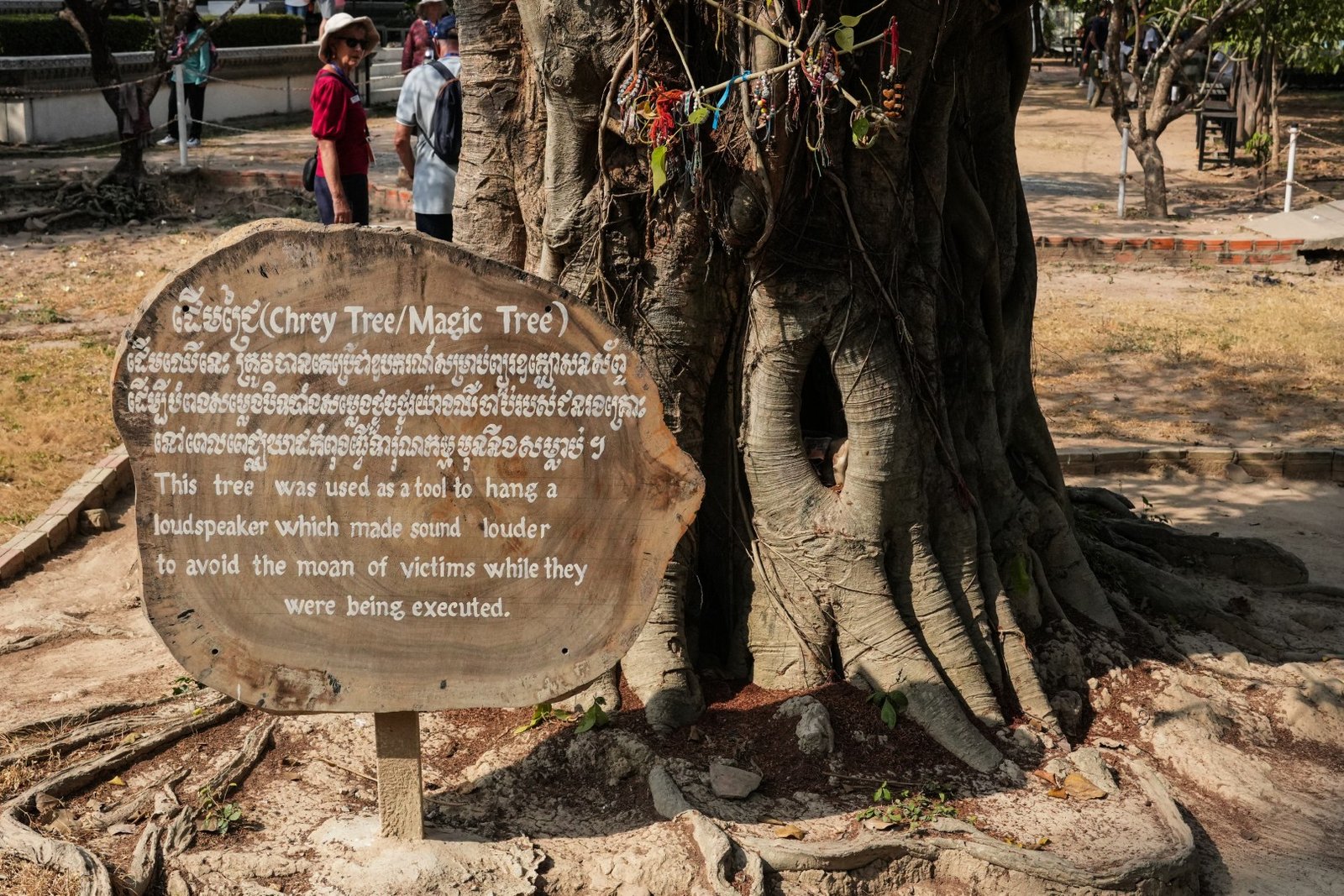
The Cherry Tree
Sinn Sisamouth, the ‘Elvis of Cambodia’, was executed.
With footage of Phneom Penh in the sixties when it was called ‘The Pearl of the Orient’.
An estimated 90 percent of classical dancers were lost. Traditional instruments were destroyed, (a tradition the Taliban continue).
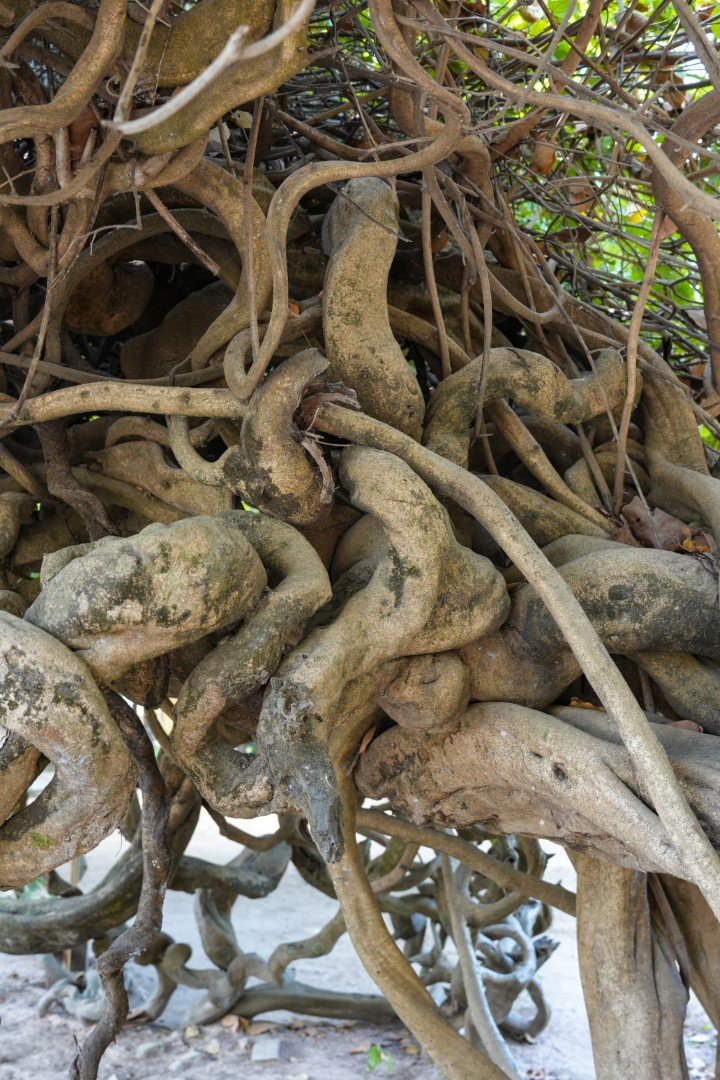
The Chankiri tree’ (Rain Tree or Monkeypod tree)
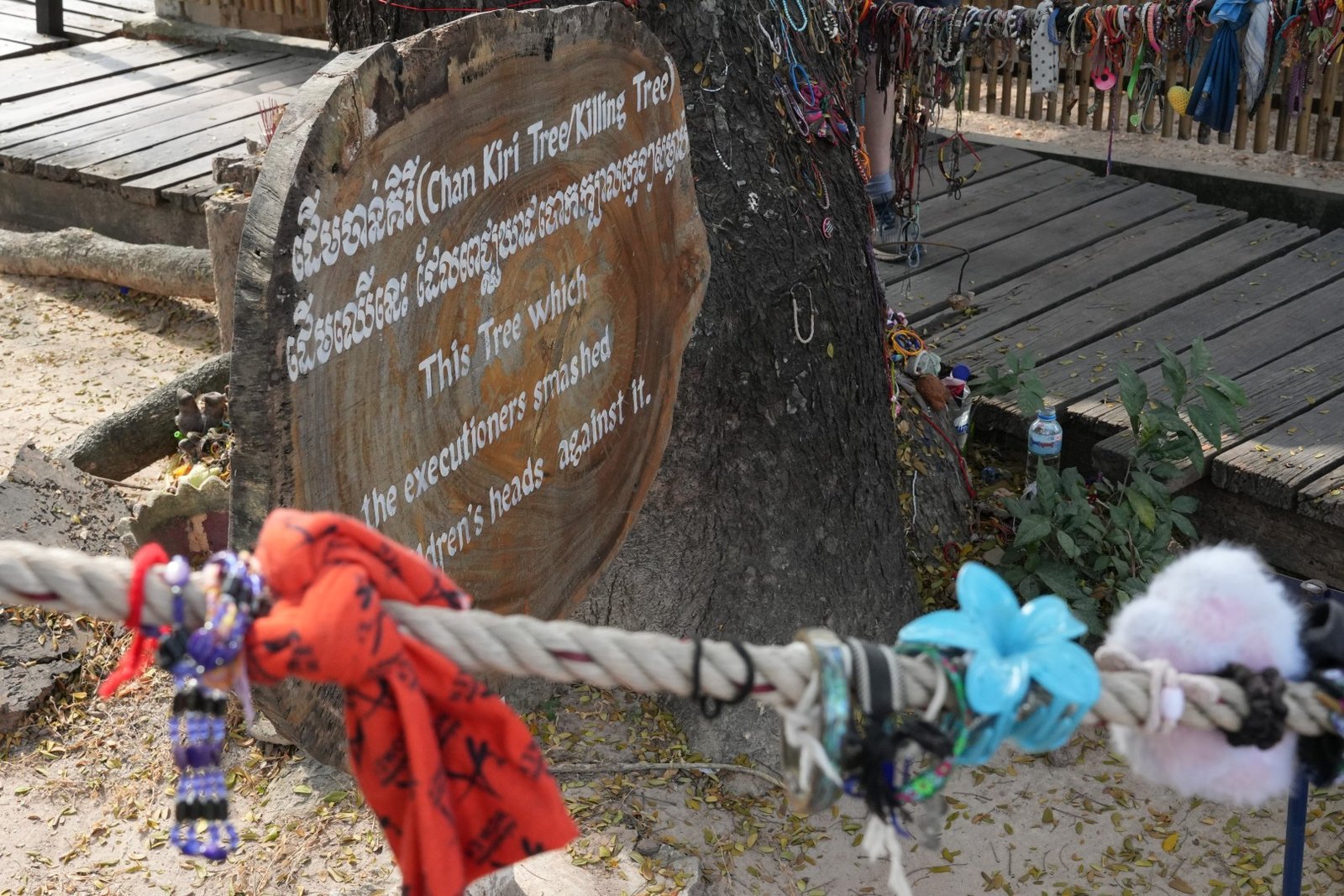
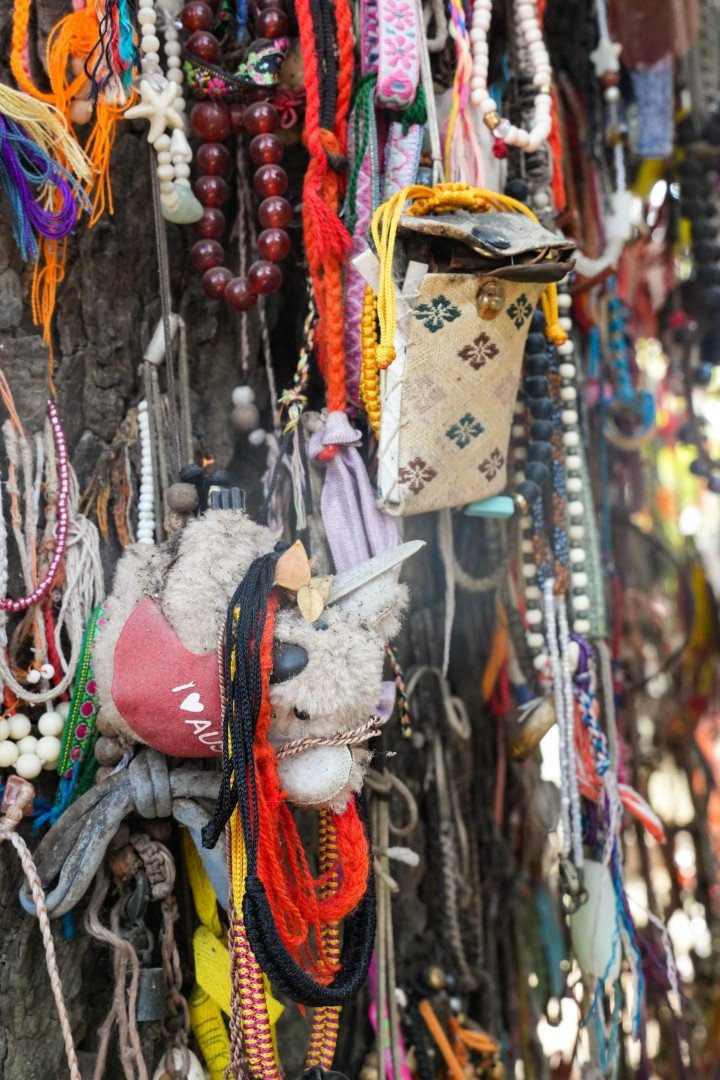
‘There are historical accounts and eyewitness testimony that infants were executed by being struck against a tree . . . I was unable to analyse any infants at Choeung Ek—I am not sure if their remains were exhumed, or whether they survived interment since infants are not present in the stupa as far as I was able to ascertain.’ Julie Michele Fleischman [i]
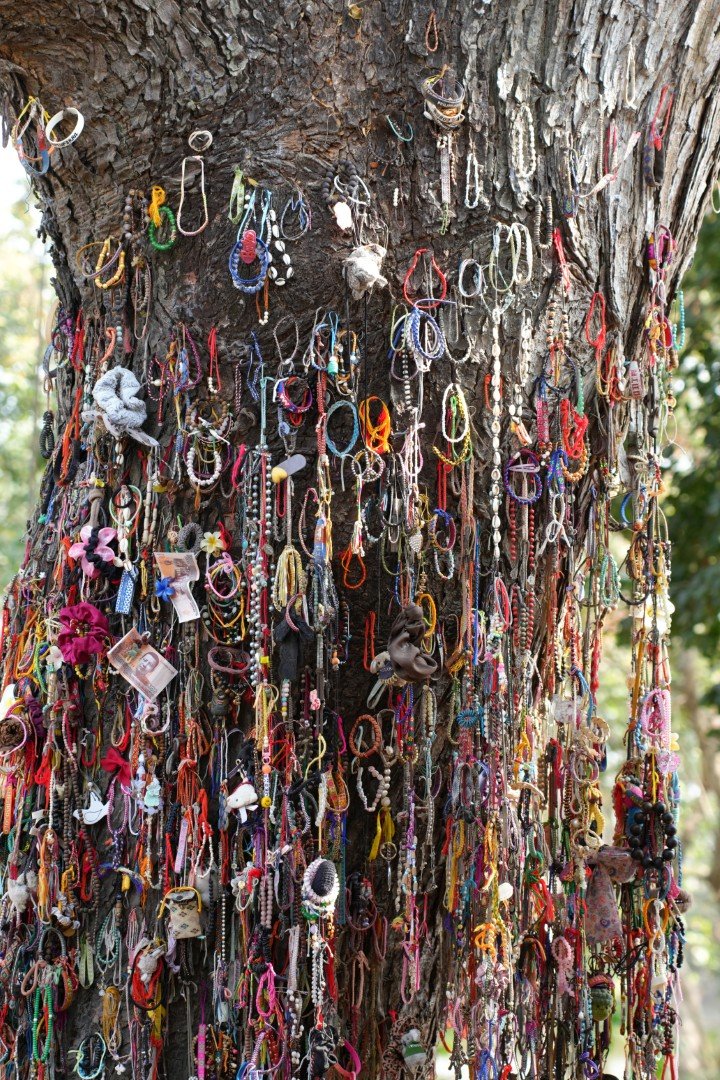
Ways of leaving
Of more than 100 original Khmer Rouge execution lists from S-21 (Tuol Sleng), 97 definitive lists were evaluated documenting the murders of 6,285 individuals. The majority (82%) were male, the youngest was 11, the oldest 77, and the average age was 29.
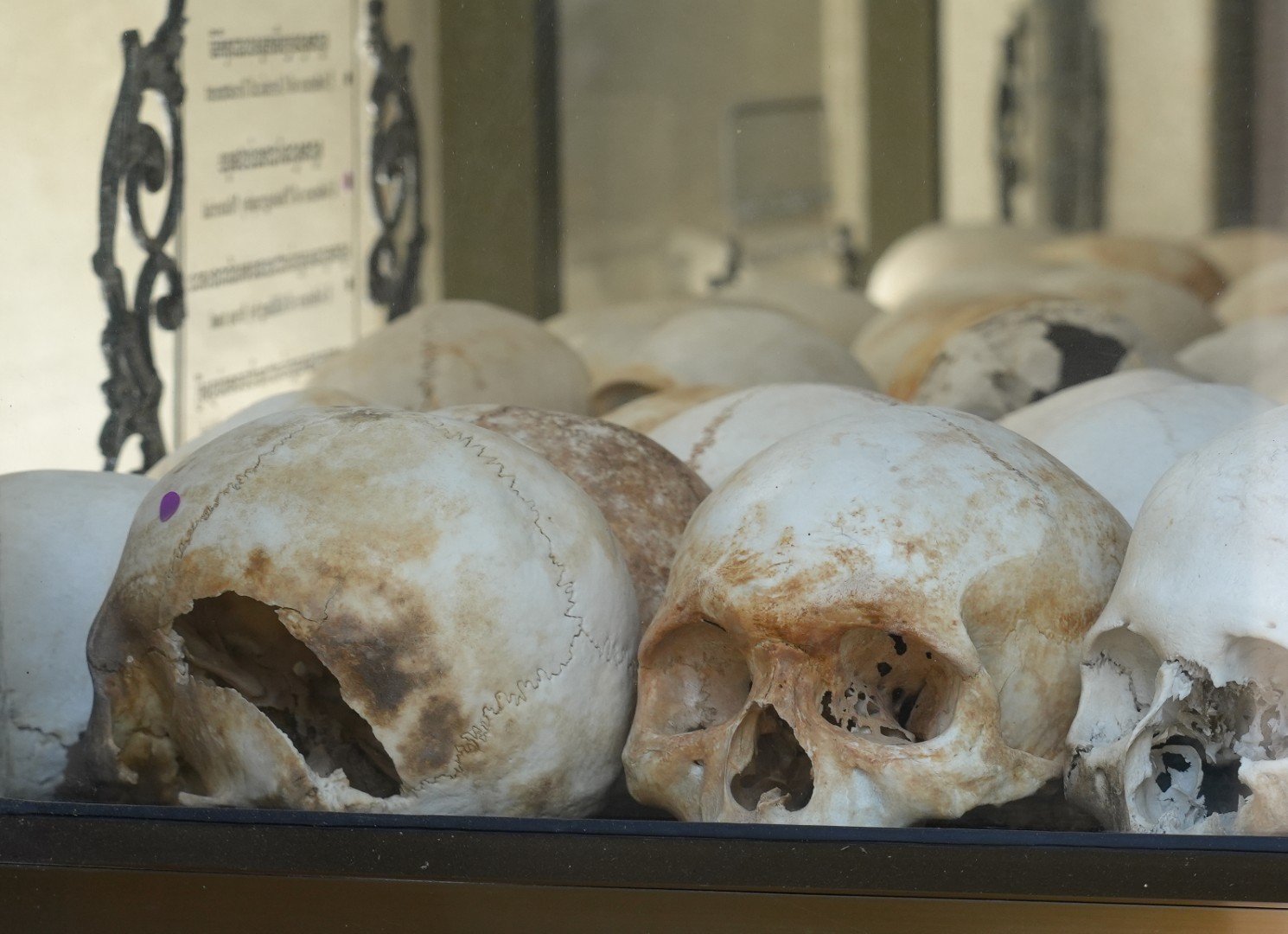
‘The 508 crania at Choeung Ek were assessed for demographic characteristics and traumatic injuries . . . Perimortem trauma was present on 311 crania (61%), with 179 (58%) having discernible impact locations. Blunt force injuries (87%) were the most common mechanism of trauma and the basicranium (53%) was the most frequently impacted region.’ Julie Michele Fleischman [ii]
One of the perpetrators Him Huy said that his superiors, Comrade Duch (Kaing Guek Eav commandant of S-21) and Comrade Hor (Kim Vat, Duch’s deputy), taught them how to kill: make the prisoners ‘kneel, then strike at the base of the neck, then cut the throat. Him Huy directed Tay Teng who stated: ‘First, [the prisoners] sat about one meter from the edge of the pit. They had two or three sit beside one another and they used a water pipe to strike the base of their necks. When the prisoners fell over, they removed the handcuffs, then they used the knives to finish killing them.’[iii]
Yet archaeologist Voeun Vuthy’s research, has shown that crania bear 1,686 marks that were caused by bullets, and almost 1,000 marks from being pierced with bayonets weapons, despite the main story being that agricultural implements were used.[iv] I find the events lack definition
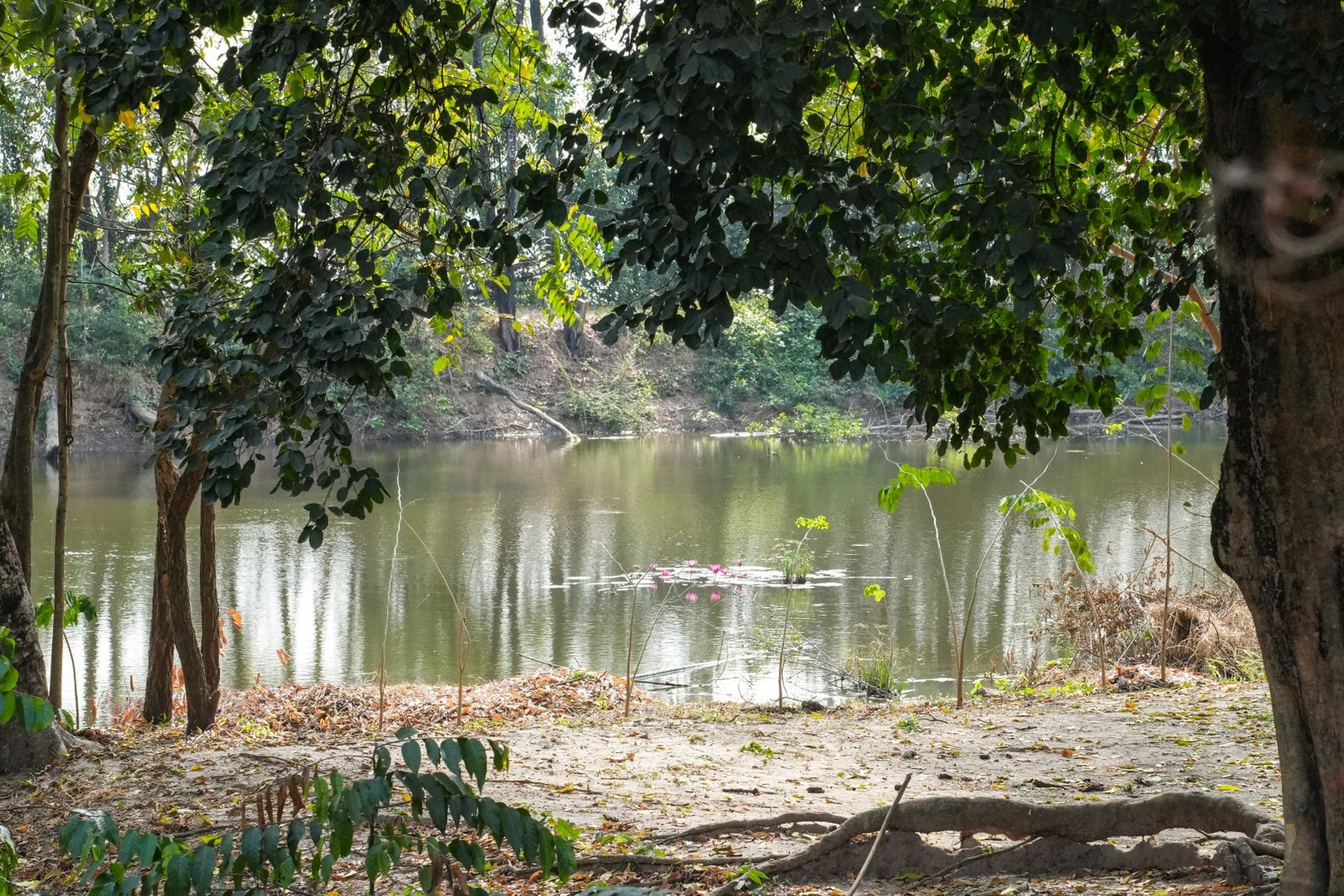
Bones lodge beneath the waterlilies.
The Stupa
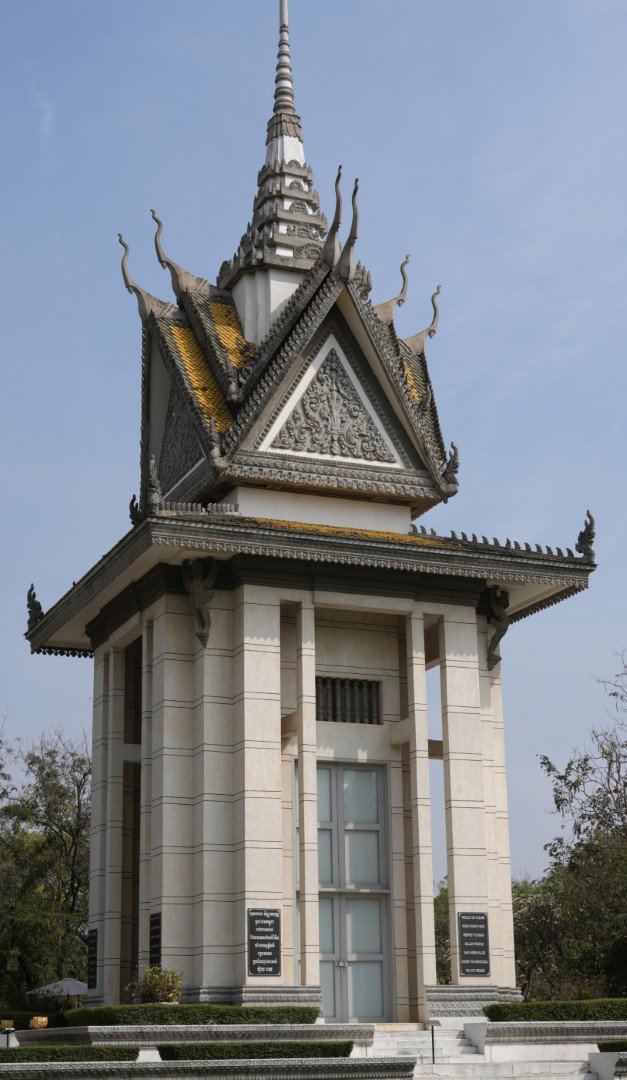
‘Although the spirit no longer lives in the bones, people feel the bones should not be sealed so the spirit can access them. Ideally, families should cremate the remains of the dead and store the ashes in a stupa to liberate the victims’ souls for reincarnation.’ Youk Chhang[v]
Wynne Cougill writes, ‘Many Cambodians believe that cremation and other rituals for the dead help ease the deceased’s transition to rebirth. In the case of especially inauspicious deaths, such as by violence or accident, it is widely believed that the dead person’s spirit or ghost remains in the place where he or she died.’ She quotes a researcher who said ‘to have uncremated remains on display is considered by some to be a great offence, and tantamount to a second violence being done to the victims.’[vi]
On the way back
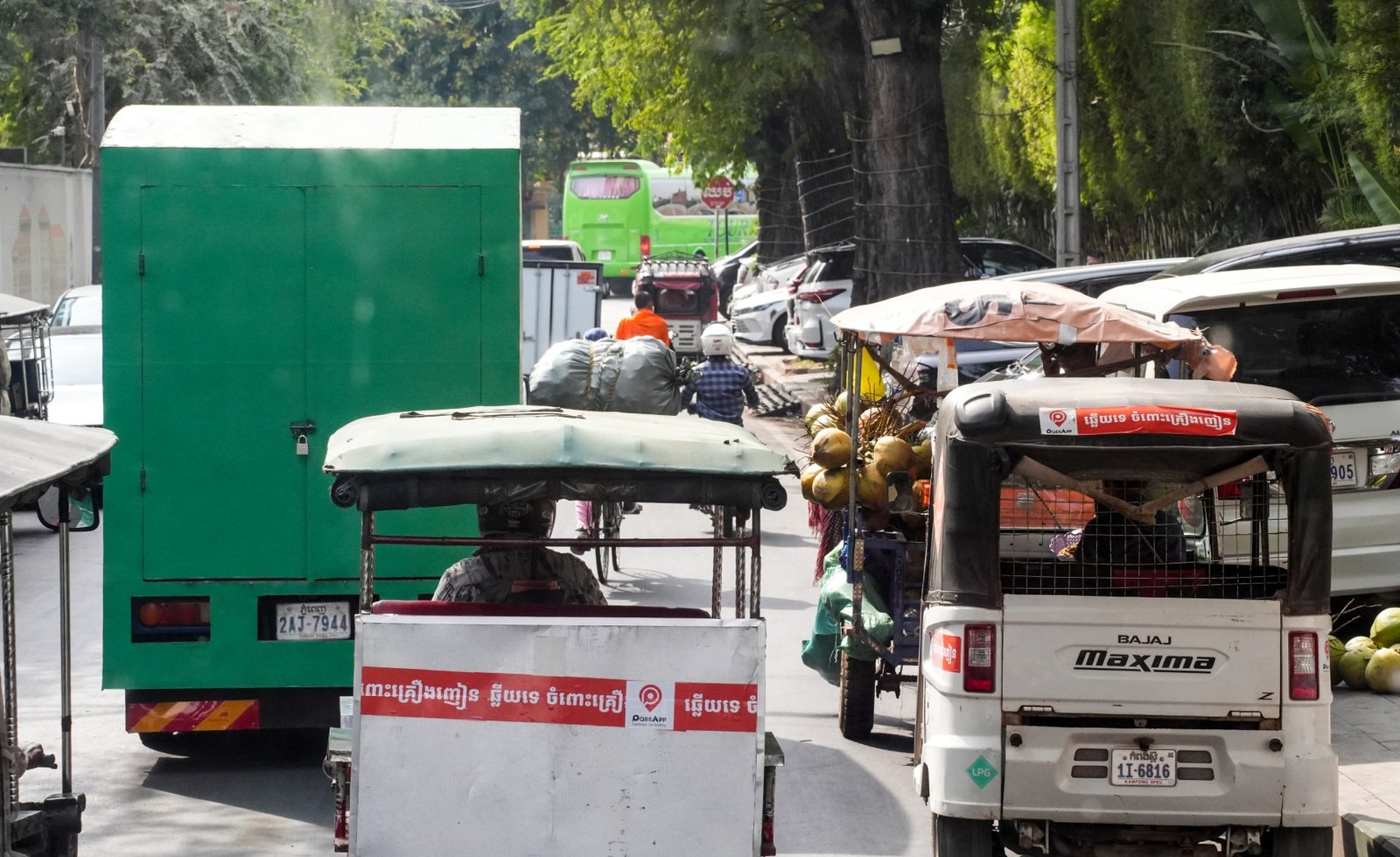
On the way back to the city the countryside is familiar countryside with fields and shacks. The Kymer Rouge dreamt of a flat, landscape wet with rice paddies.
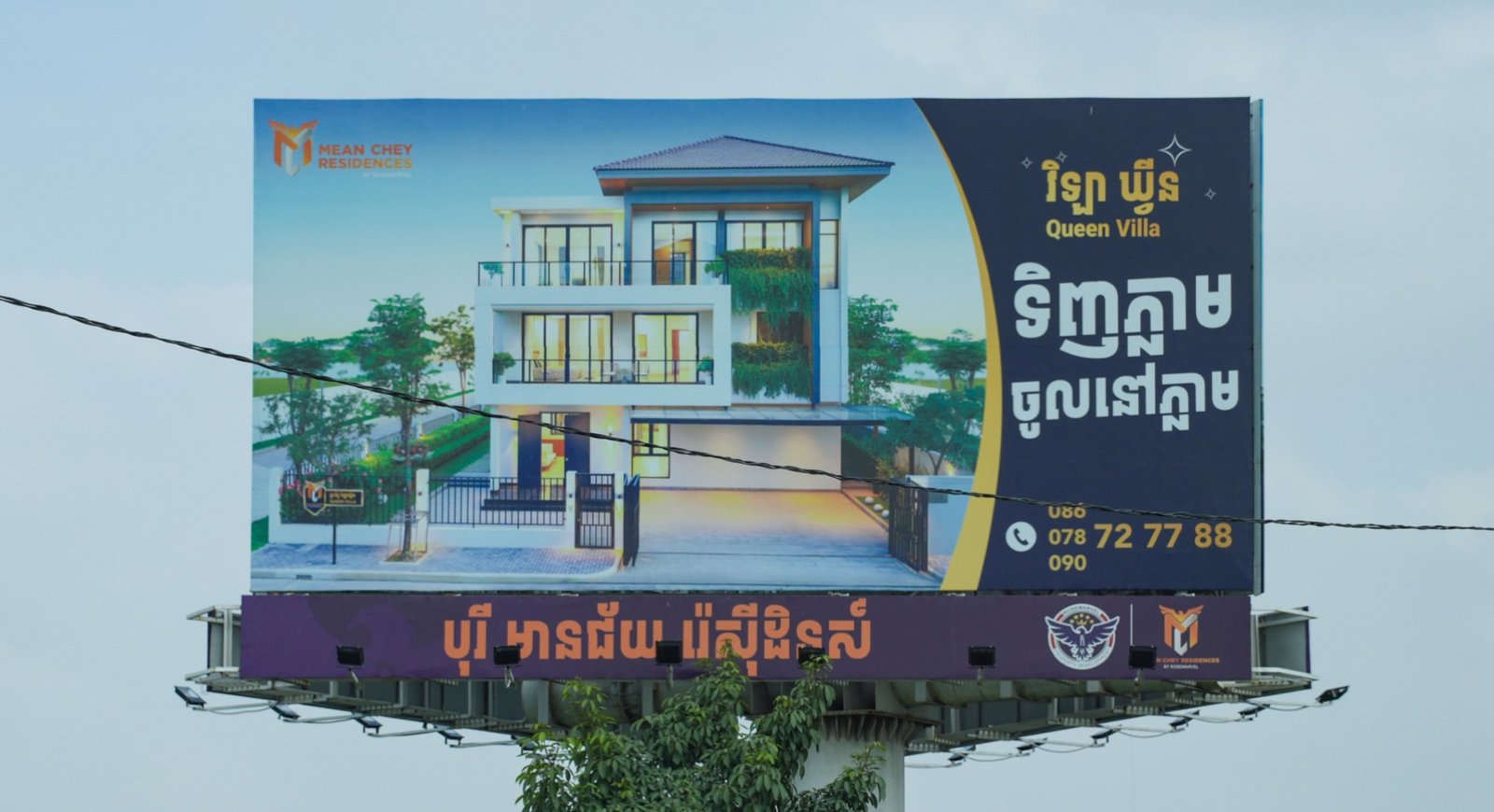
A billboard visualises a happy and prosperous future. When and where did a sensation of joy first reappear?
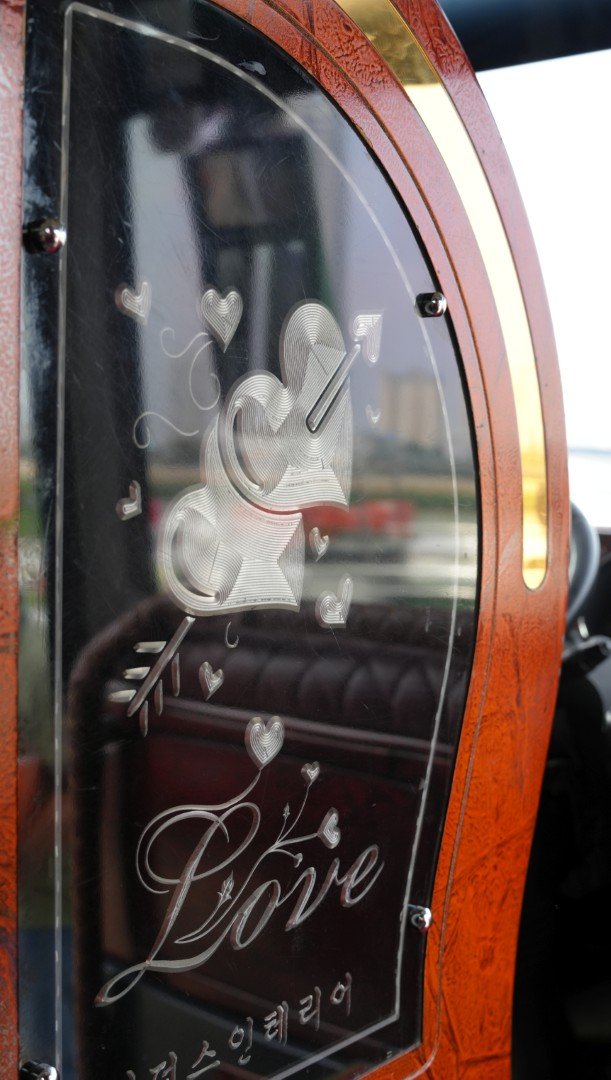
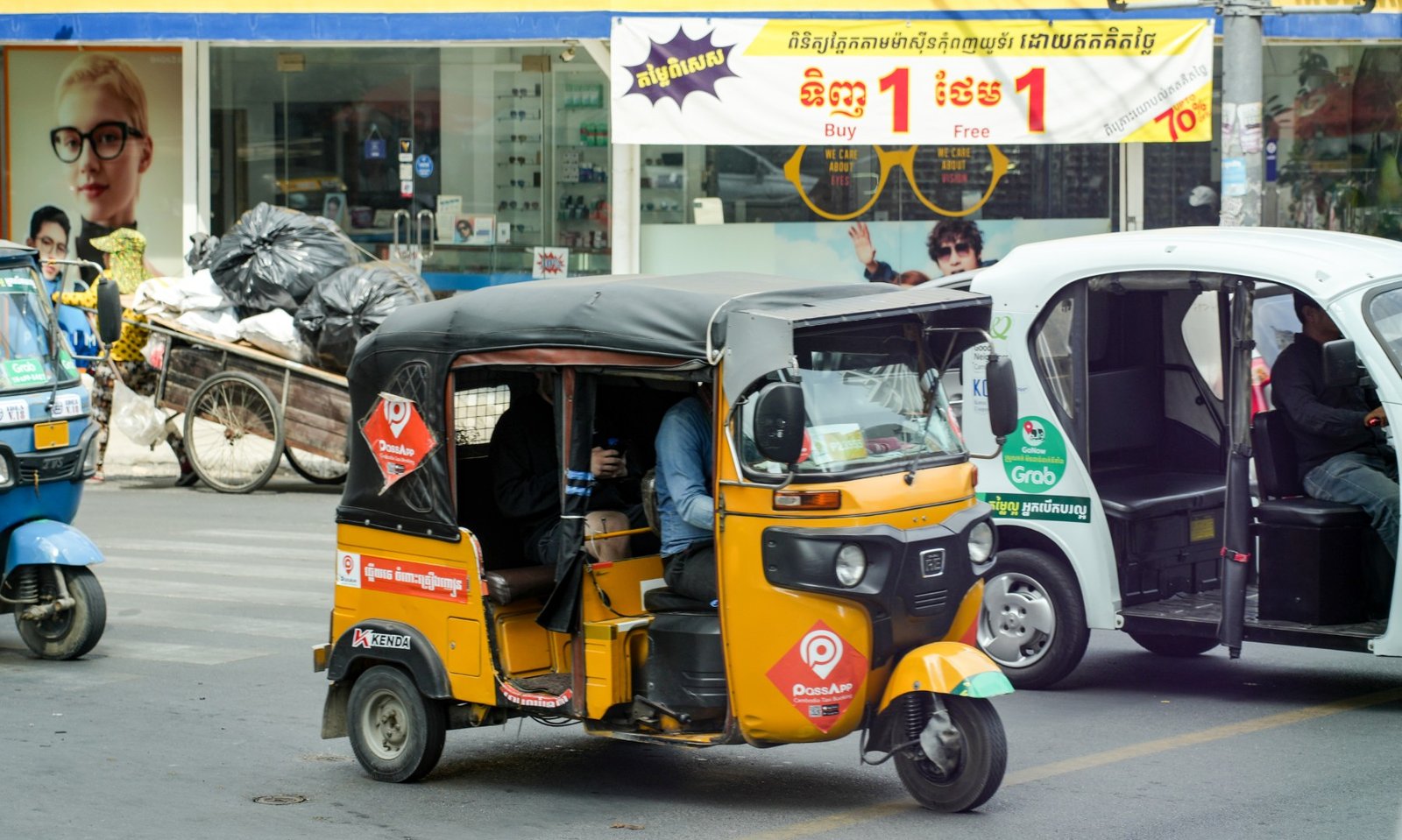
I am transported with love though heavy traffic.
Everyone returns my smile.
I am not seeing the intergenerational trauma.
The city is an engine now fired back to life,
but inequality is severe.
One factor that bolstered the Khmer Rouge.
We need to see clearly what is happening.
[i] Julie Michele Fleischman, ‘Remains of Khmer Rouge Violence: the Materiality of Bones as Scientific Evidence and Affective Agents of Memory’, Thesis, Michigan State Uni https://d.lib.msu.edu/etd/6679?_ p206-7.
[ii] Julie Michele Fleischman, ‘Remains of Khmer Rouge Violence.
[iii] Extraordinary Chambers in the Courts of Cambodia 2016i. Quoted by Julie Michele Fleischman, ‘Remains of Khmer Rouge Violence’.
[iv] Voeun Vuthym, ‘Report on the Preservation of Human Remains at the Choeung Ek Genocidal’, Ministry of Culture and Fine Arts. 2016. Quoted by Julie Michele Fleischman, ‘Remains of Khmer Rouge Violence’. Quoted by Julie Michele Fleischman, ‘Remains of Khmer Rouge Violence’.
[v] Youk Chhang, executive director of the Documentation Center of Cambodia in Phnom Penh.
[vi] Wynne Cougill, ‘Buddhist Cremation Traditions for the Dead and the Need to Preserve Forensic Evidence in Cambodia’, Phnom Penh: Documentation Center of Cambodia. http://d.dccam.org/Projects/Maps/Buddhist_Cremation_Traditions.htm. Wynne Cougill began working as a volunteer editor and writer for the Documentation Center of Cambodia in early 2000.