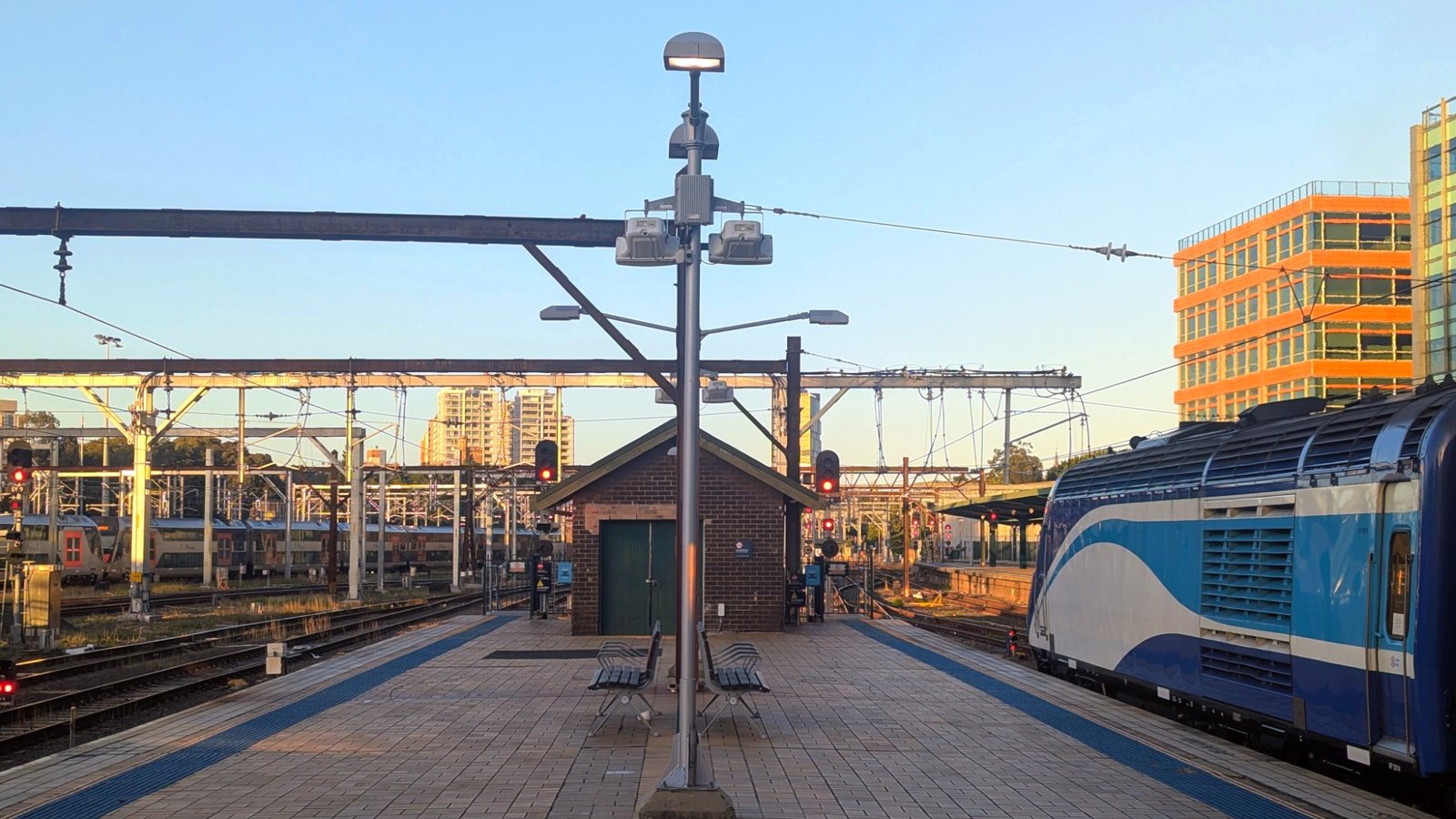
The lights are red.
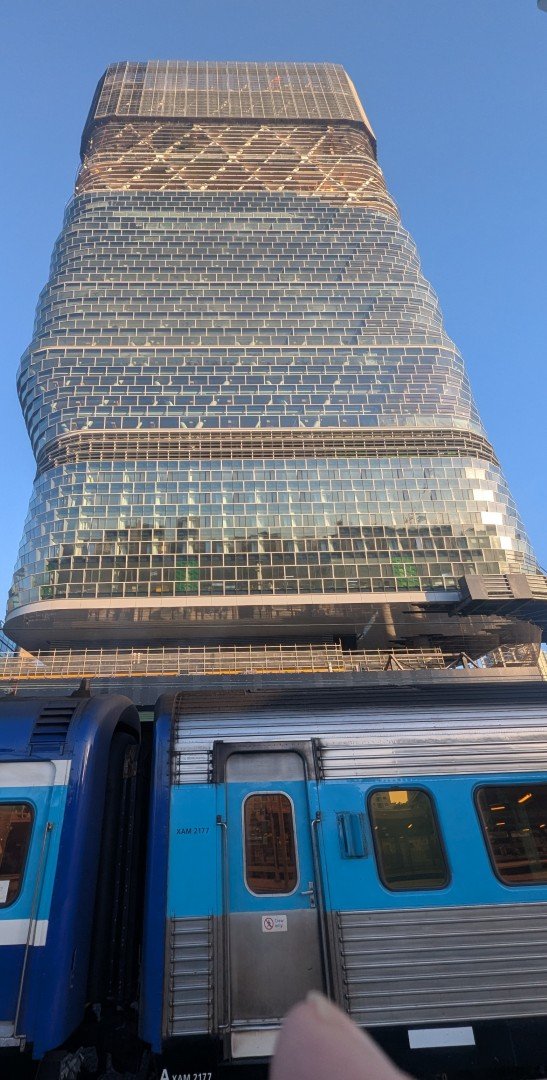
I pace the platform, the new build over the station keeps growing, a rule of thumb.
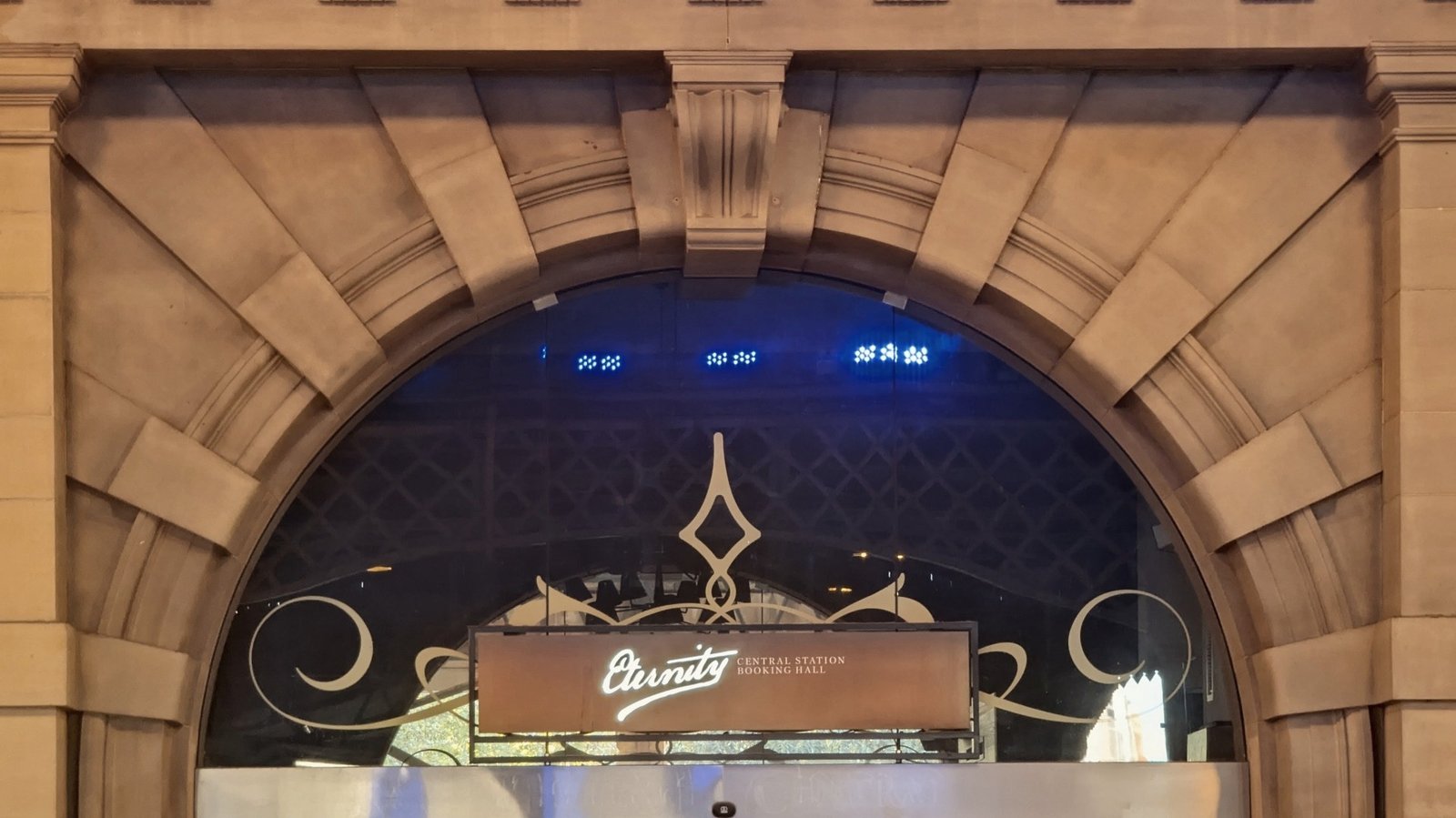
Eternity is waiting.
Our seats face a metal wall, we have been assigned a sleeper. My companion’s phone rings as we leave Central. It’s his mother. He is very sweet, ‘I love you so very much’, he repeats three times as the call winds down.
We swap names and he adds, I don’t talk politics. He is ADF, calls me sir, which I find unsettling.
The coat hanging up is Russian, expensive, made of horse hair and faithful, but he had to sew on the epaulettes. I nearly reach over to touch.
On his phone he stands with Montgomery, who has a gaunt likeness and white moustache. Does he talk like Monty in that distinctive, upper-class squeak? I ask. No, he is Australian. I thought he might have put one on.
I asked why Russian? There was only German, American or Russian to choose from. I think Stalingrad influenced his choice.
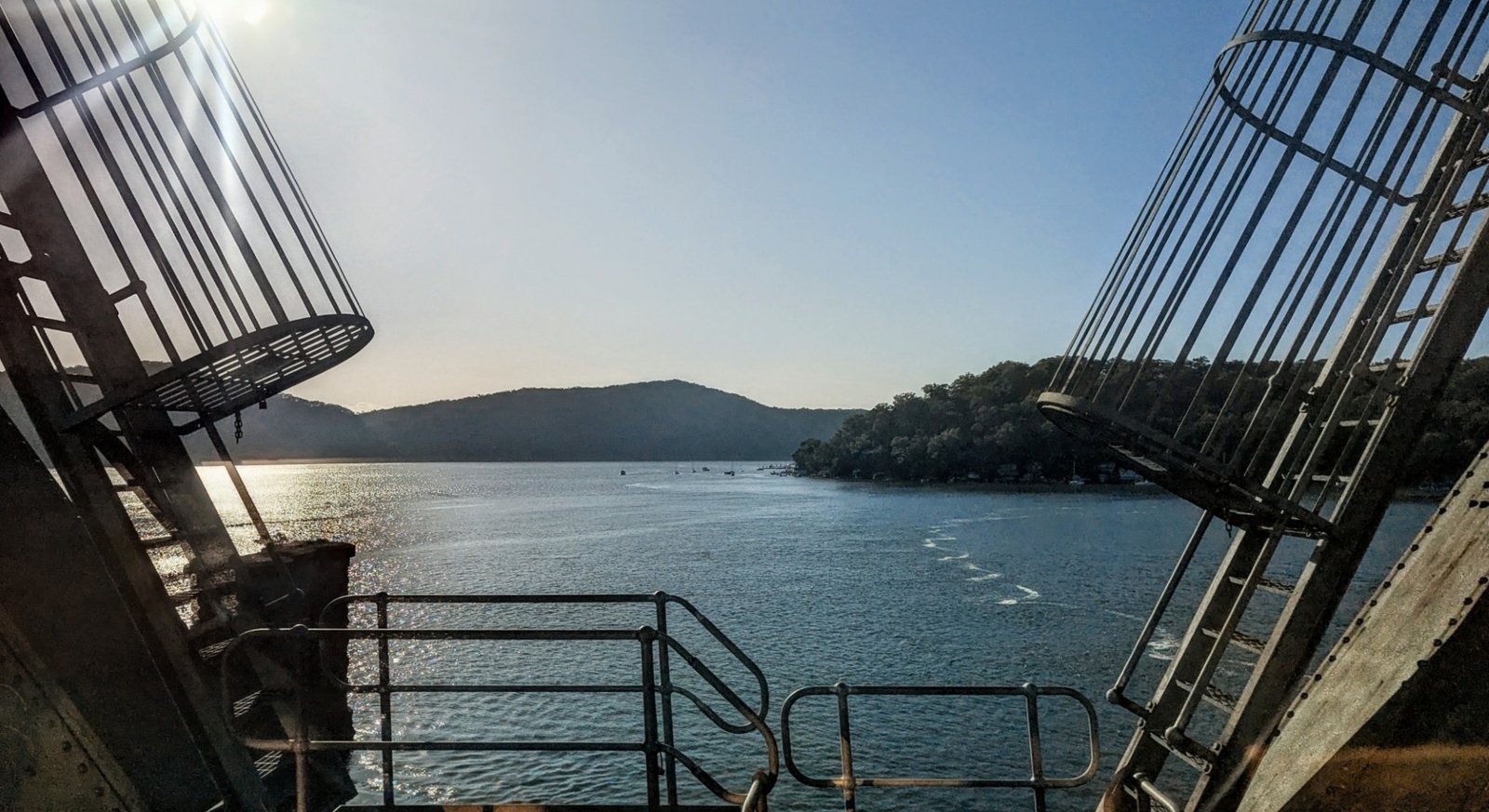
We cross the Hawkesbury. I have the window seat in the first carriage. Following the curves of Mullet Creek, the back of the train comes into view, strangely satisfying. Yachts are so white.
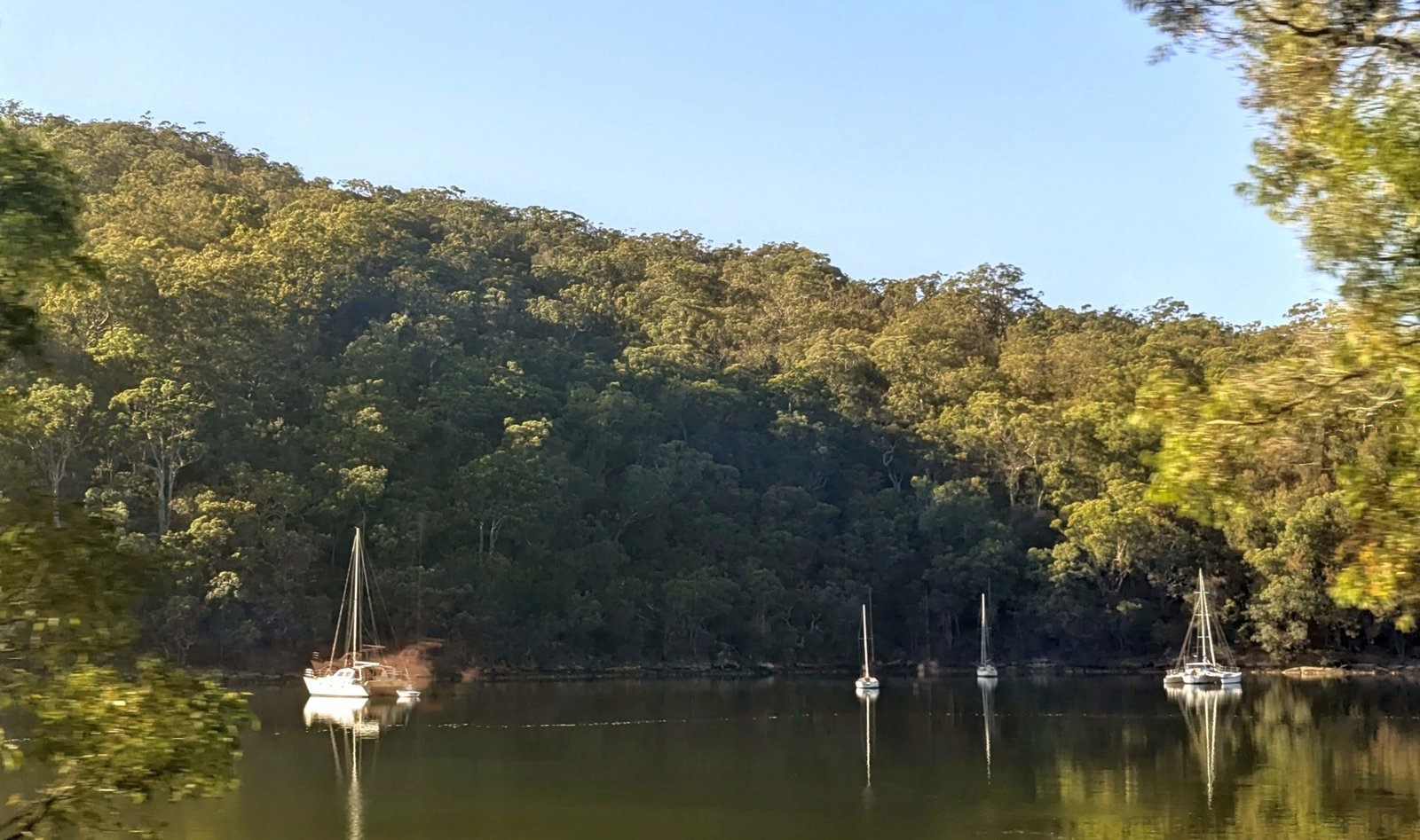
The gaze drinks, eyelids are unused.
There is no point in saying I grew up on war comics, but now I don’t like war. Wars are dirty and messy and overflow. I had a lone star rifle, a cap gun with a silver plate above the trigger which read ‘Super Sharp Shooter’. I shot pigeons in the churchyard. What are we really afraid of? A pair of Ospreys fly away over Brisbane Water.
The autumn light seems both archaic and newly minted. I can’t explain. We ask the woman who comes round for the restaurant car orders about the constant rattling overhead. That’s the arm of the bed, she says. The stock is over forty years old.
I listen to music on my headphones, photograph landscapes through the window., Being behind glass the view is sometimes subject to reflections. We pass Cardiff. I doze off. Where are we?
Conversation restarts. Why would anyone be German, unless German? I ask. He thinks some may be secret neo-Nazis, disappointed they can no longer wear swastikas in public. He is so pleased his mother has finally stopped riding her Harley.
Wooden dwellings, grey timber slabs possibly a century old and possibly derelict, hard to be sure. One surrounds itself with a wide verandah. A shed has fallen to its knees. A faint momentum of tracks goes over the top of the dry hills.
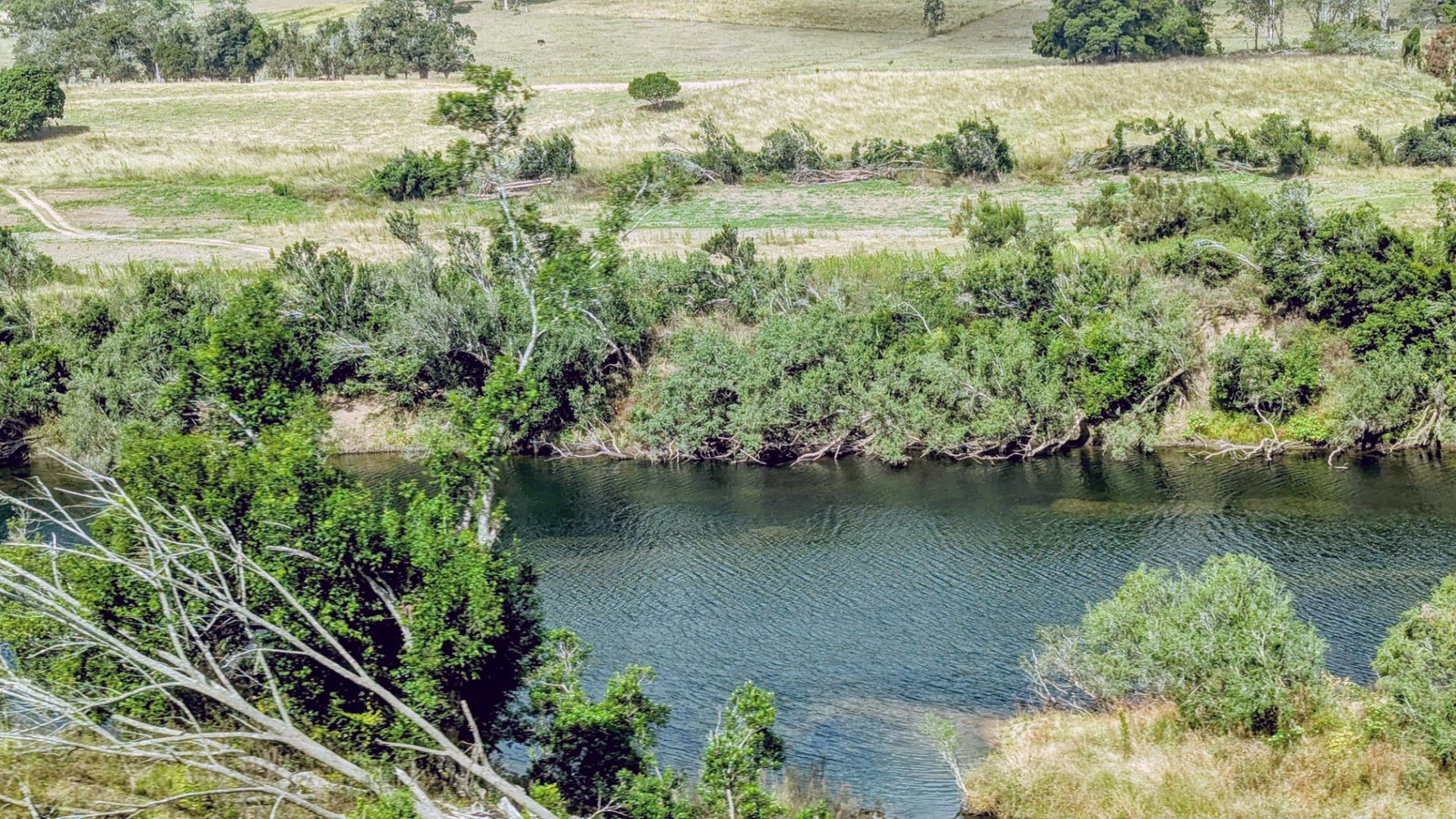
I have been on this train before, crossing rivers and forget which is which. A camera can never capture the same river twice. Two Black Swans balance on one, pale ducks look like glass figurines.
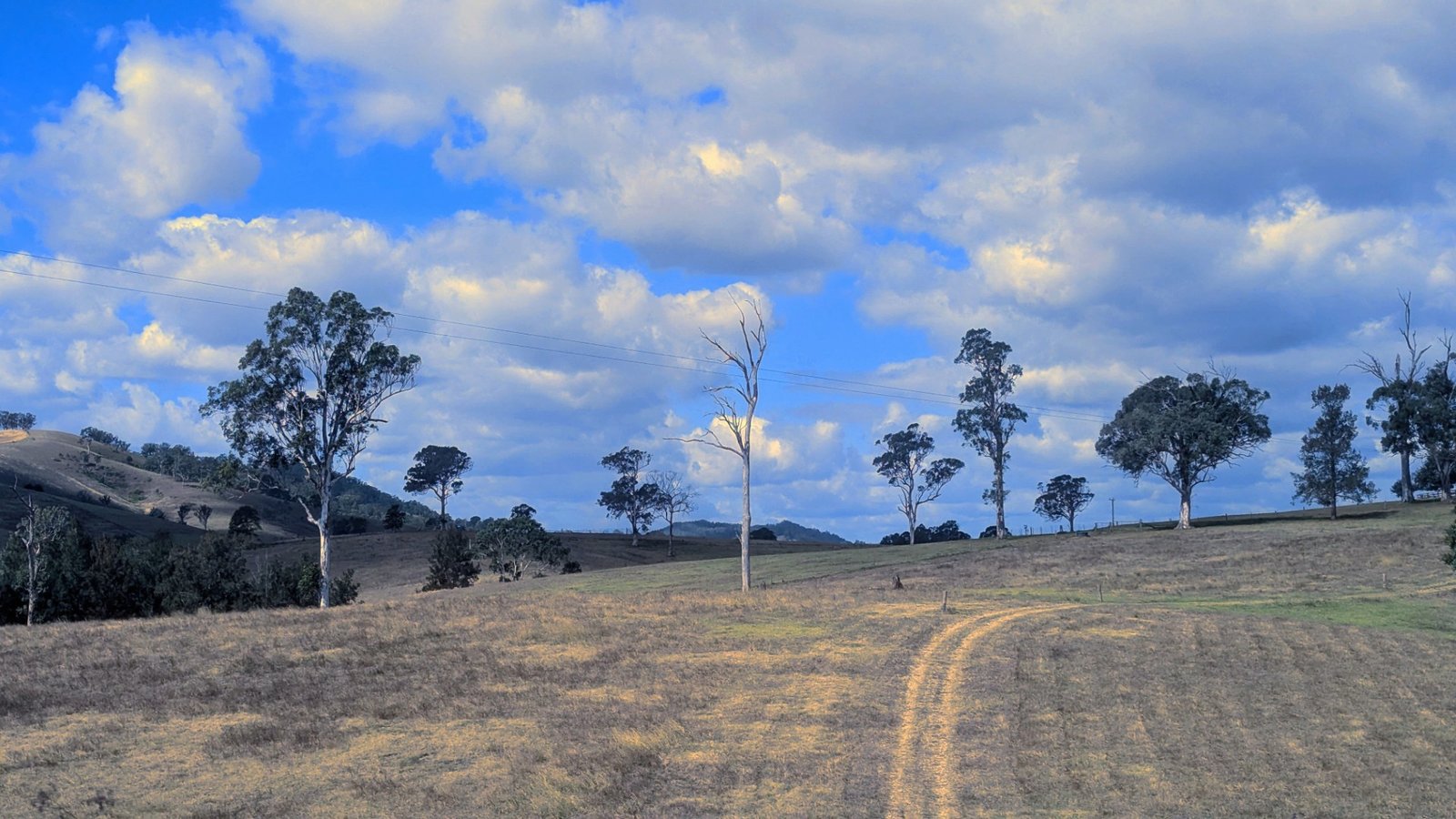
The horizon veers dangerously from sandstone cuttings just feet away to vast. Not one well-nourished macropod. I eat some chocolate, leave the apples till later.
The world of the recent past is hidden, where are we? We roll from one scene to the next in seconds under the whirl of cumulus. Is this an interlude of constant leaving or a journey?
A small-town skate park features a capsized shopping trolley. I look up, don’t see the emergency button. There’s no stopping. We all follow and can’t leave ourselves alone.
When did we cross from Worimi to Biripi, Biripi to Dunghutti to Gumbaynggirr, our nation.
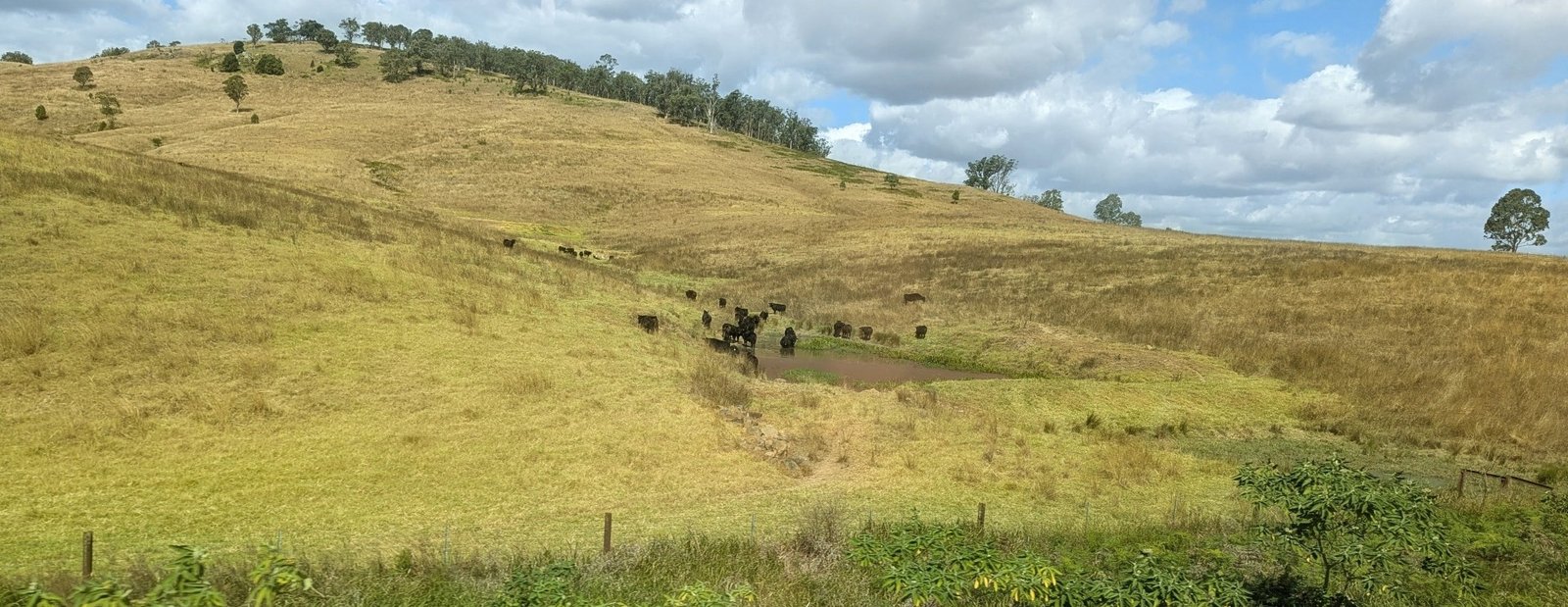
One photograph I regret missing is of young black steers gleaming in a paddock, the autumn light mythical, a flock of snowy egrets waving slowly over them. Another missed is a resting place, the hues of rusting cars are underrated.
Since he started Second World War re-enactments, the rules have changed – no more Panzers, (no chance of replaying the Battle of Kursk, ripping 2 million men and 8,000 tanks) and no more firing blanks. He blames insurance costs. Now it’s all about authenticity – uniforms, accessories and attention to detail. He shows me another picture. He is standing beside all his kit and accoutrements neatly laid out, lacking camouflage. Pretence is real, war incomprehensible.
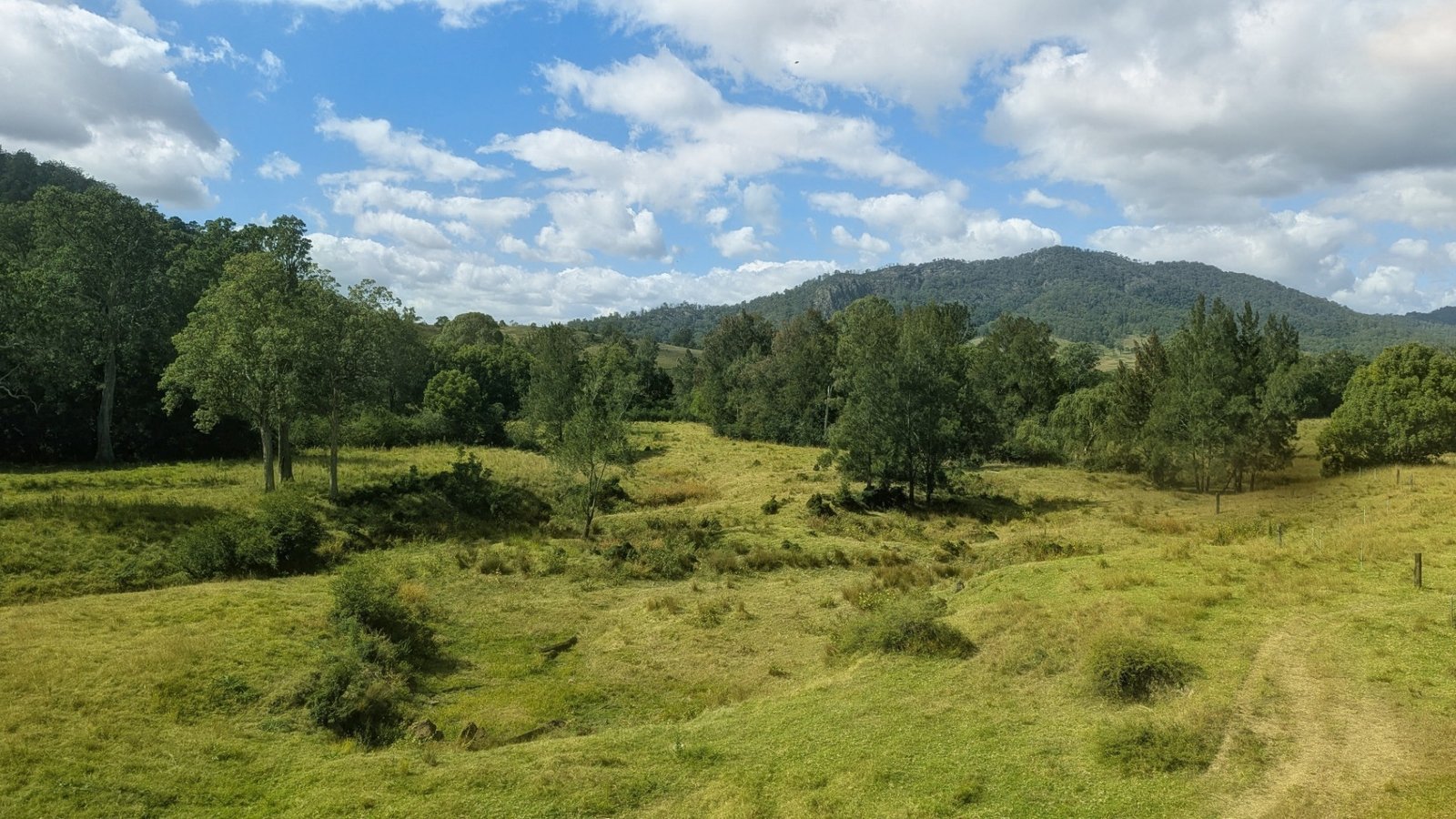
Two Magpies stutter in flight. Conversations are a performance. We have surrendered to this track.
A small quarry surrounded by grasses is a huge wound. Are we waiting for these moments to pass? Twice, cows lay in a circle inside the solitude of a grandmother tree, pale in the paintings’ great shadows. The camera missed both performances.
We are flowing across the surface, the eye catches on barbed wire, traces of human. A dirt road between line and rough paddocks, collects stacks of illegal dumping.
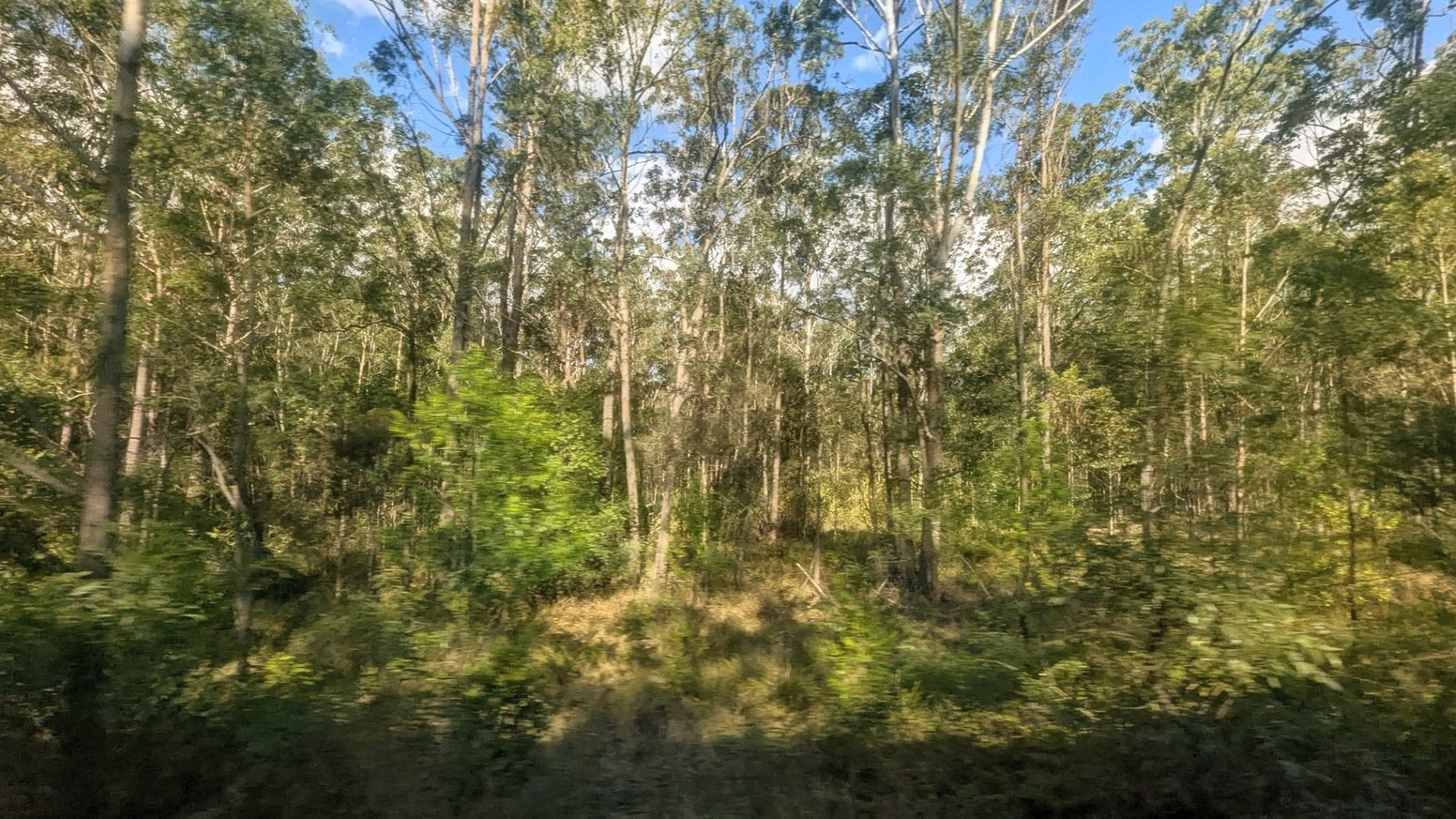
Nearing home, a fast-moving forest and its algebra of growth has a ring of familiarity.
I escape with a solid handshake from the polite young man.