Spring has arrived — or at least one version of it. According to the Bureau of Meteorology, spring begins on 1 September, while astronomical spring starts with the equinox around 22 September. Yet these tidy dates tell us little about what’s happening on the ground. The weather in Hobart on 1 September bears no resemblance to Bamaga at the tip of Cape York, and even here in Valla, the seasonal shift rarely fits neatly into a calendar box.
The seasons themselves are an accident of deep time. Around 4.5 billion years ago, a planetary collision tilted Earth’s axis by 23.5°, giving rise to the seasonal cycles that support the biodiversity we depend on. The word spring comes from the Old English springan — to leap or burst forth — but as early as 200 years ago, Australia’s first published poet, Barron Field, lamented that our continent lacked the dramatic winter to spring transformation familiar to Europeans.
Across Australia, many communities recognise seasons not by fixed dates but by environmental cues. In the north, Europeans simplified the year into wet and dry. Ngan’gi knowledge holders from Nauiyu Nambiyu, working with CSIRO, describe thirteen seasons.
Closer to home, Dr Chels Marshall’s Gumbaynggirr Seasonal Calendar places us in Guunga — “Warming Up”, heading toward Galagaar Guunda — “Fresh Start, good weather.” Her Good Koala Country Plan outlines six main seasons shaped by ecological rhythms.
A little further north, the Arrawarra Gumbaynggirr calendar identifies five seasons; August and September are marked by bloodwood blossoms and the flowering of the fringe lily, whose tubers are prized as good tucker.
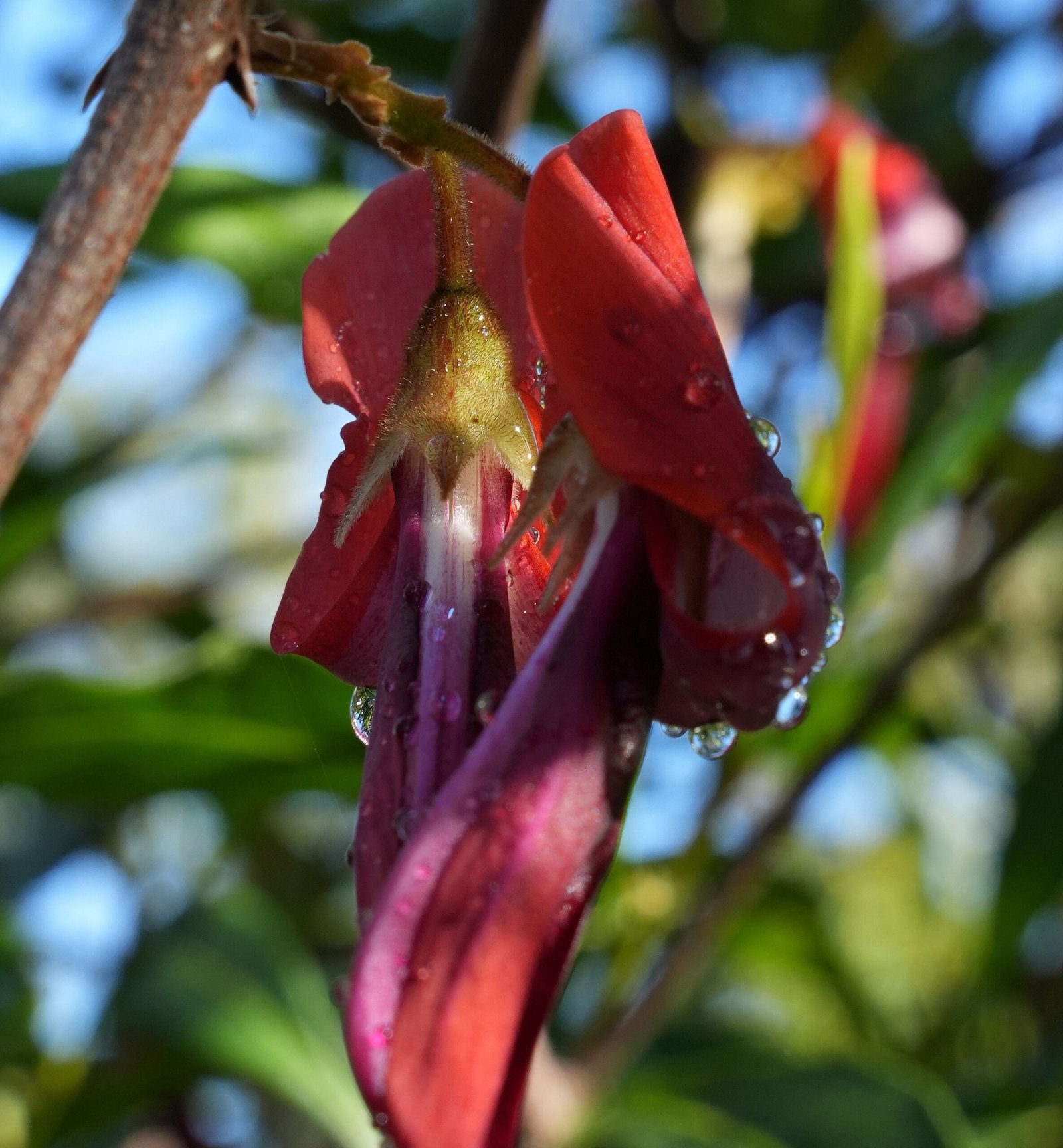
Being attentive to these cycles helps us reconnect with the natural world. In our garden, native vines — jugiil — are flowering: the Wonga Wonga vine (Pandorea pandorana), the red Running Postman (Kennedia prostrata), and Hardenbergia, the Purple Coral Pea. Naming them all is still a work in progress.
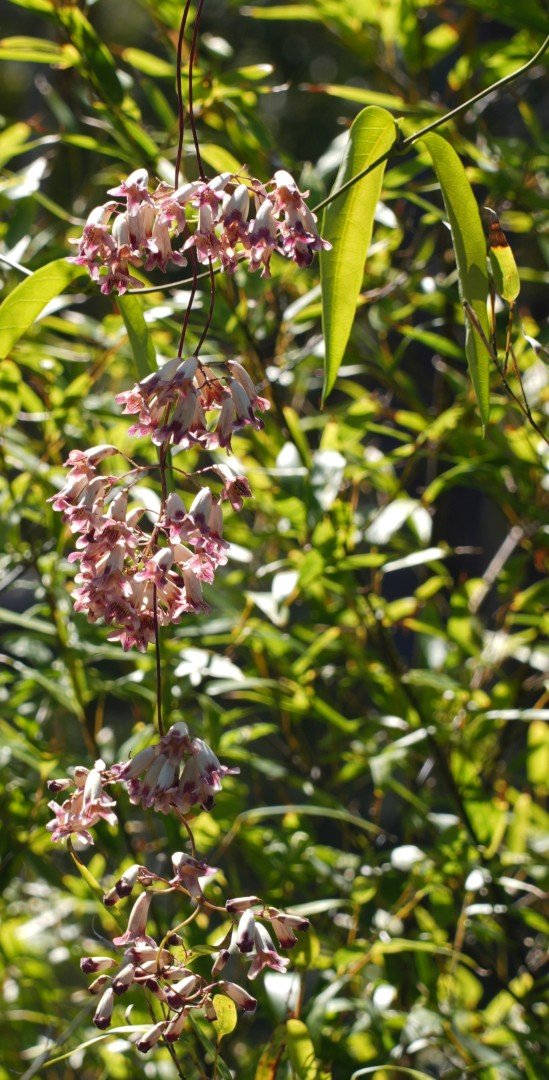 Wonga Wonga vine
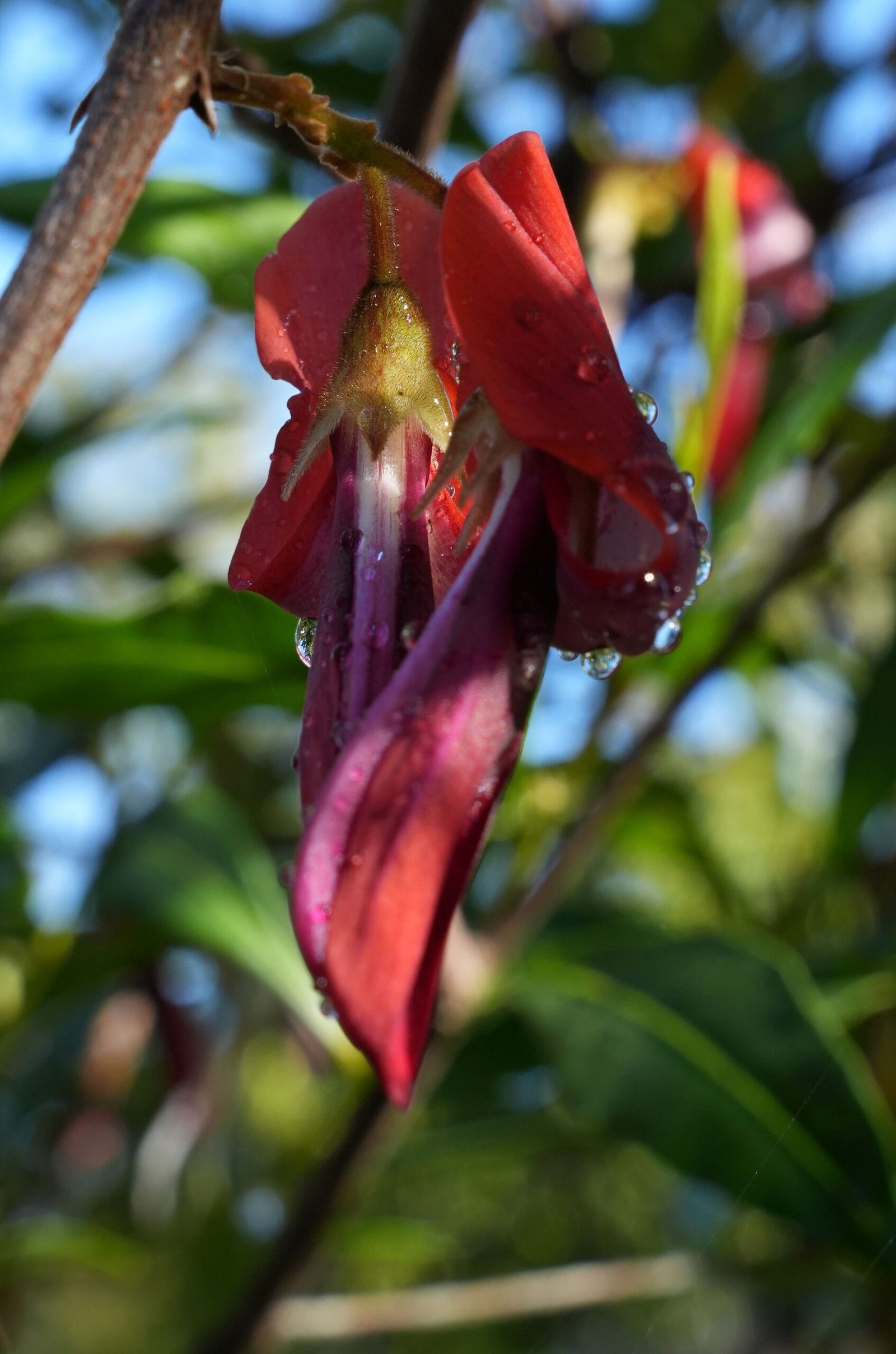 Running Postman