Poem
About ten years old, I thought I was starving. Refusing
the slop served up, I would raid the monk’s refectory
after midnight and steal bread and jam risking a thrashing.
‘Mop’ was nine years old when he witnessed his mother,
grandmother and other family members killed. He survived
three gunshot wounds, but survival discovered hunger.
He became a slave labourer in a collective farm, typically
fed one bowl of watery rice soup a day. Mop dreamt
of eating three meals a day, then one, and then anything.
Forced into rural work, starvation accumulated countless
corpses adding to those executed. Despite pervasive famine
the regime exported large amounts of rice to China.
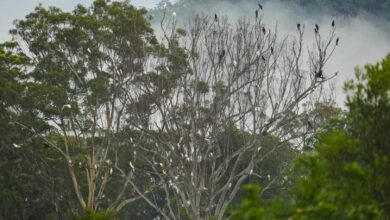
The past stretches behind the whooping of endangered
Gibbons, those who survived the hunt after ‘Year Zero’.
You can’t eat trees, but you can eat apes and monkeys.
Pol Pot was a bit of a gourmet. He loved wild boar,
venison, cobra, oysters, duck eggs and Swiss cheeses,
though the Pot’s experience of love is a mystery.
Notes:
Mop was the nickname of Nawuth Keat. Nawuth Keat and Martha Kendall, Alive in the Killing Fields, National Geographic Kids, 2009.
The Khmer Rouge exported 150,000 tons of rice in 1976 alone, mainly to China.
The social engineering policy of ‘Maha Lout Ploh’ by the Khmer Rouge imitated Mao’s ‘Great Leap Forward’ which caused the Great Chinese Famine with an estimated 40 million deaths between 1959 and 61. It was a ‘Great Leap Backwards’. Agricultural ‘reform’ through collectivisation and concentration on rice production similarly led to widespread famine in Cambodia. How come we don’t learn from other’s mistakes? Forensic analysis of over 20,000 mass graves indicates over a million victims of direct execution. Probably, even more died from disease and starvation.
Year Zero, Cambodia
The concept of such a radical break from the past was influenced by the Chinese Cultural Revolution’s ‘Destroy the Four Olds’ campaign and, to a lesser extent, by the French Revolutionary Calendar’s ‘Year One’. Between 1863 and 1953, Cambodia was part of the French empire. With the exception of Pol Pot, every member of the Khmer Rouge leadership group (Noun Chea, Ieng Sary, Son Sen, and Khieu Sampân) had studied at prestigious universities in Paris.
The French Revolutionaries introduced a new, secular, and decimal-based calendar in 1793 to replace the Gregorian calendar. The system featured 12 months with 30 days each, renamed based on nature and agriculture, removing Christian and royalist influences. A ten-day week excised Sundays. The poet Fabre d’Églantine named the months and 360 days of the year (the rest were holidays) in celebration of the ordinary: parsnip day, manure, mint day, quail, otter, dog day etc.
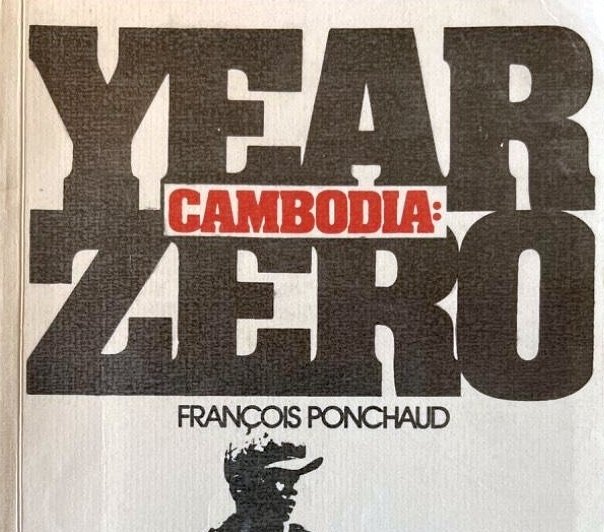
The calendar began on September 22, 1792 (the proclamation of the Republic), marking Year I – not year zero. (The term Year Zero was used by researchers, such as François Ponchaud, who documented the regime’s atrocities).
The Reign of Terror (1793–1794) saw approximately 17,000–40,000 official executions and tens of thousands more deaths in prison or without trial. Sary thought the French Revolution had not gone far enough. The revolutionaries had stopped short rather than pursue it to its ultimate conclusion. Sary and his comrades held Maximilien Robespierre in high esteem for his radical thought and consistency. Robespierre was a radical Jacobin leader who dominated the Committee of Public Safety during the ‘Reign of Terror’ (September 1793–July 1794). He justified violent repression as necessary to protect the Republic from internal enemies. Fear and paranoia led to a loss of civil rights and slaughter just as in Cambodia, but they did not use torture.
Suong Sikoeun, Sary’s close collaborator, wrote: ‘If you do something, you must do it right through to the end. You can’t make compromises. You must always be on the side of the absolute – no middle way, no compromise.’[i]
Sary and Samphân had written doctoral dissertations in Paris on Cambodian agriculture and economics. So how did this recoil to the fields be so disastrous? The consequences of radical dreams . . .
The government directed the peasantry to ‘plant corn, plant potatoes, plant vegetables, plant gourds, plant pumpkins. Plant everything. Plant a lot.’ However, rice remained, ‘the fundamental matter, the key related to the life and death of our revolution, our people, and our country.’[ii]
[i] Andrus Ers, ‘Year Zero: The Temporality of Revolution, Studied Through the Example of the Khmer Rouge’, in Rethinking time : essays on history, memory, and representation, Hans Ruin & Andrus Ers (eds.), Huddinge [Sweden], 2011, p160.
[ii] See James A. Tyner and Hanieh Haji Molana, ‘Ideologies of Khmer Rouge Family Policy: Contextualizing Sexual and Gender-Based Violence during the Cambodian Genocide’, Genocide Studies International, Vol13:2, 2020.