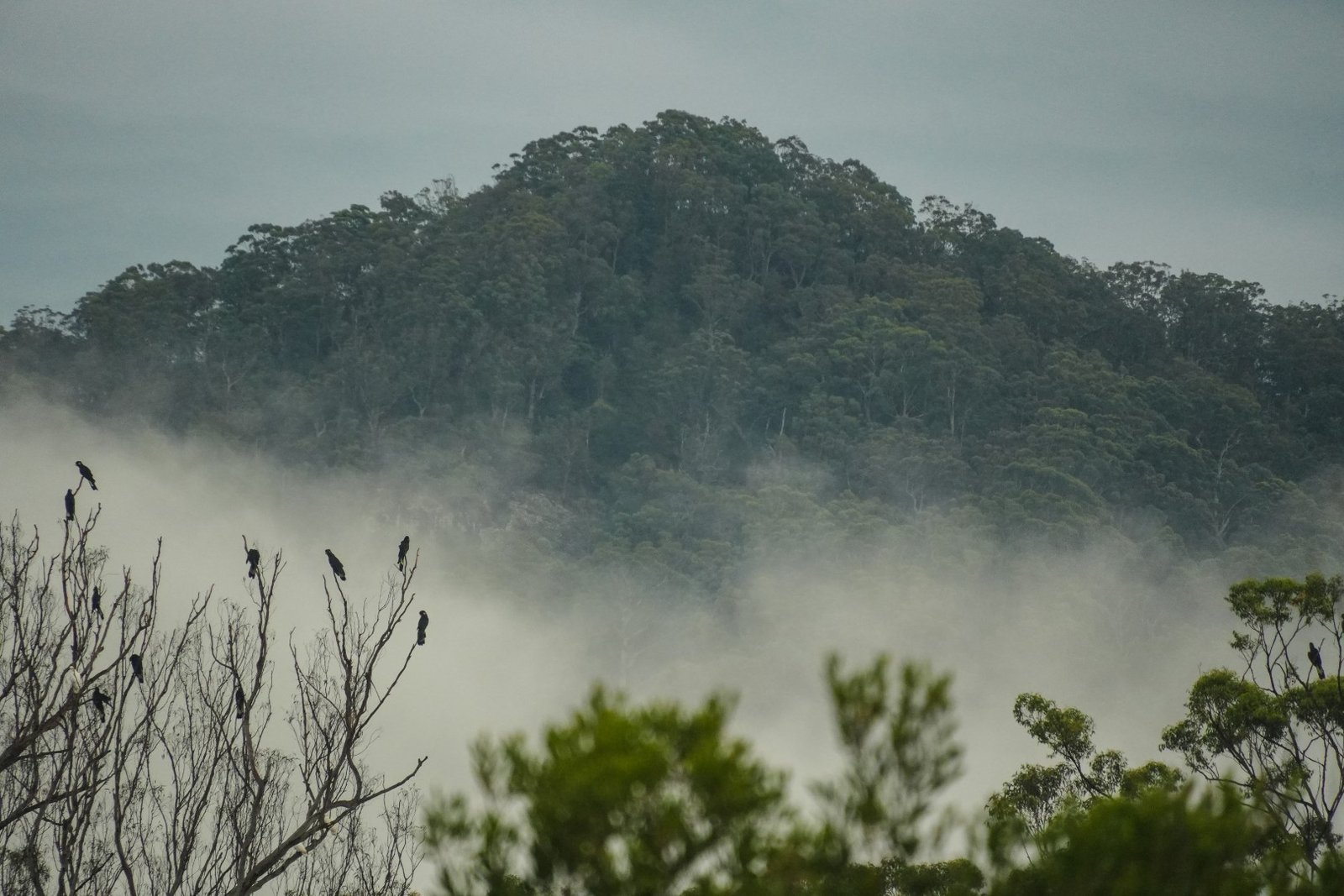
Nunguu Mirral, a sacred mountain for the local Gumbaynggirr people, a male initiation and increase site for Eastern Grey Kangaroos, lifts behind our home. The last ritual was a while ago. Private land surrounds the top now designated Nunguu Mirral Aboriginal Area. The peak is formed from coastal granites after the massive Permian-Triassic extinction event ‘the Great Dying’ – a new start. On the lower slopes west was a small Molybdenite mine, and a gold mine to the north east. History changes everything. Locals call it Picket Hill. The sacred cannot be seen or touched, so how do you photograph it, or paint it?
In the last fifty years, artists and art critics have focused on feminism, sexuality, race and identity – not ecology and ongoing ecocide until more recently. The word ecology was not coined until 1866 by Ernst Haeckel. I am not thinking of ecological art here, but comparing two artists and their attention to the natural, the living. particularly birds.
Painting is not a competition, but I would argue that Turner demonstrated much more scope than Cézanne. Turner could draw detailed topographical views, paint landscapes, history paintings and birds. He began with water colours, then used oils in his early twenties seeking professional recognition.[i] His use of watercolours for finished works influenced the status of the medium in the fine art world. Cézanne is probably the more influential, being called ‘the father of modern art’ (attributed to both Picasso and Matisse).
Neither painted what was in front of them. In 1845, Ruskin travelled to the Alps to visit the actual scene of one of Turner’s watercolours, ‘The Pass of Faido’. He compared Turner’s painting to reality and found that the mountains looked ‘pigmy & poor’ in comparison. Turner had exaggerated the scale of the mountains for the sake of ‘mountain truth’. Ruskin made a drawing himself and comparing the two later discovered a number of discrepancies. He redescribed Turner’s skill as ‘arrangement of remembrances’. [ii]
Not until the early 1880s did Cézanne focus on Mont Sainte-Victoire. In his early fifties he left Paris for Aix for good. He built a studio with a large north-facing window and clear views across to the mountain. Cézanne never included the large iron Croix de Provence clearly visible from his favourite vantage point. He lived in an apartment and walked a mile up the hill every morning. He lived a life devoted to art.[iii] He’d start around dawn, return to Aix for lunch, then walk back up the hill to paint until half five, either in the studio, the garden, or further up the hill. He painted the grey-white limestone mountain, usually including the surrounding valley and plains, more than 60 times.
Montagne Sainte-Victoire obsessed him and is now a protected Natura 2000 site, and a great spot for birding. [iv] The diverse habitats from shrubland to woodland support many species. Peregrine Falcons soar over the cliffs, and Mediterranean species like warblers (Dartford, Sardinian, Orphean, Subalpine), Cirl Buntings, Crag Martins and Nightingales can be found.
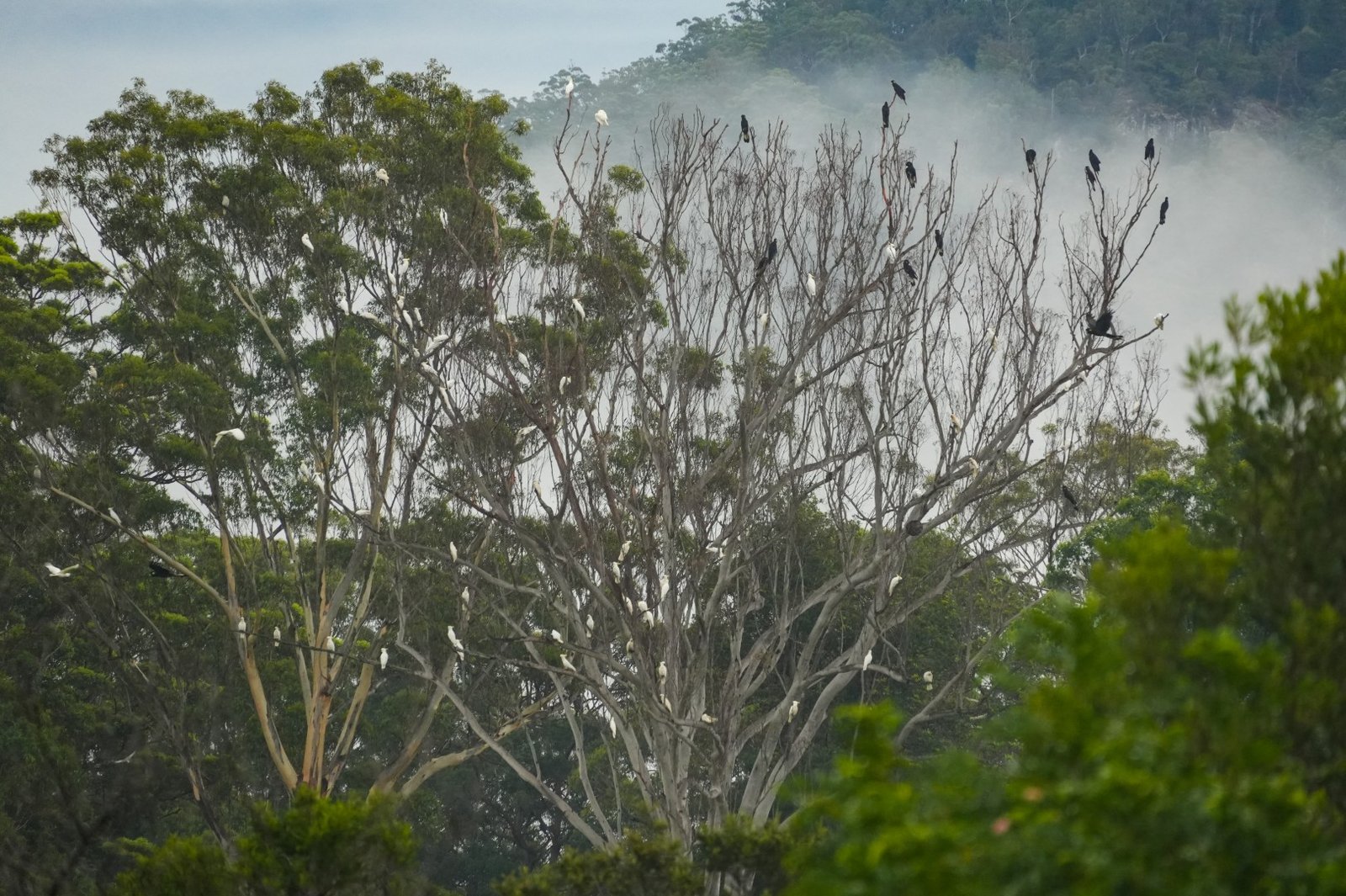
Paul Cézanne early on, painted ‘Woman with a Parrot’ (‘La Femme au perroquet’ c1864), and late in his career owned a parrot. He probably craved encouragement when he tried to train his pet ‘Bisou’ (‘Kiss’ to say ‘Cézanne is a great painter’).[v] I can’t find any evidence that he was a successful, but he never painted the birds that surrounded him.
After Turner’s death, Ruskin wrote from Venice asking his father to buy drawings from the artist’s estate in 4 categories. The first – ‘those which I would give any price for it if I had to give’ – listed only seven watercolours. To my surprise, of the seven, four were detailed bird drawings.[vi]
[i] Turner first exhibited a work aged 15, a watercolour, ‘A View of the Archbishop’s Palace, Lambeth’ (1790). He experimented with new pigments as they appeared, using cobalt blues after 1807, and chromium yellows, first made in England in 1816. Cezanne also adopted new synthetic pigments as they became available pre-packaged in tubes and tins, enabling his plein air output.
[ii] Ruskin’s personal truth was very different. ‘The granite ranges of Mont Blanc are as interesting to the geologist as they are to the painter’, in ‘Facts and Considerations on the Strata of Mont Blanc, and Some Instances of Twisted Strata Observable in Switzerland’, The Magazine of Natural History, December 1834.
[iii] In 1906, he took visiting artists Maurice Denis and Ker-Xavier Roussel to the spot up the hill and they documented Cézanne painting the mountain (an oil painting by Denis and photographs by Roussel).
[iv] A 10 Km loop on the Sainte-Victoire massif takes in Sainte Victoire, Croix de Provence (946m) and Brèche des Moines. Brèche des Moines, The Monks’ Breach, was excavated from the mountain by Abbot Aubert to give more light to the Priory. You’ll pass the Signal, Petit Garagaï, Grotte des Hirondelles, Croix de Provence, The 17th C Sainte-Victoire priory-, Brèche des Moines and Refuge Cézanne.
[v] He sold few paintings during his lifetime, significant sales only starting after his 1895 Paris exhibition.
[vi] There were produced for his patron Walter Fawkes of Farnley Hall, Leeds between 1815 and 1820. See Anne Lyles, ‘Turner and Natural History: The Farnley Project’, Tate, 1988.